
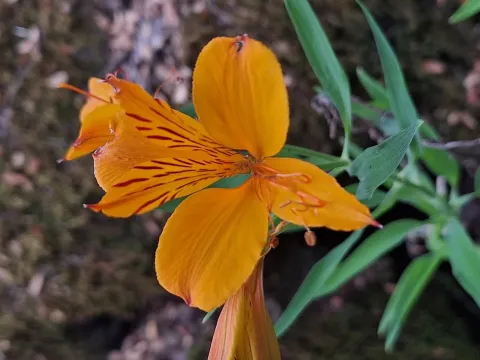
Alstroemeria aurea
Alstroemeria aurea
Alstroemeria aurea, commonly known as the golden Peruvian lily, belongs to the Alstroemeriaceae family. This perennial species is native to the temperate regions of Chile and Argentina, characterized by its fleshy, tuberous roots.
What the section contains
Alstroemeria aurea
Propagation is typically achieved through rhizome division during the dormant season or early spring. Carefully separating the clumps ensures that each new piece has healthy roots and growth buds for successful establishment.
For seed propagation, seeds require a period of cold stratification to break dormancy. Sowing should occur in late winter using a sterile, well-draining seed starting mix to ensure a high germination rate.
When transplanting young plants, it is crucial to handle the root system with extreme care, as it is highly susceptible to damage. Establishing the plants in pots first is a recommended method for better survival.
Preparation of the planting site includes deep tillage and the incorporation of organic matter. Adequate spacing is necessary to allow for the natural spread of the rhizomes and to prevent overcrowding.
Alstroemeria aurea requires soil that is rich in organic matter and has excellent drainage. Waterlogged conditions must be avoided at all costs, as the fleshy roots are prone to rapid decay in saturated soil.
Light levels are crucial for optimal performance. While they prefer full sun in cooler climates, they benefit from partial shade in warmer regions to prevent leaf scorch and soil overheating during the summer.
Consistent moisture is needed during the active growth phase, but the frequency of watering should be reduced once the plants enter dormancy. Drip irrigation is the preferred method to maintain soil humidity.
Temperature management is key to successful production. They thrive in moderate temperatures between 15 and 22 degrees Celsius and generally require protection from temperatures that fall below the freezing point.
Providing a regular fertilization schedule is essential. A balanced NPK fertilizer with added trace elements, specifically iron and magnesium, helps in preventing chlorosis and promoting vibrant flower colors.
As a professional cut flower crop, Alstroemeria aurea is highly valued for its long vase life and striking appearance. A single mature plant can produce a significant number of stems over an extended harvest period.
Yield stability is achieved through proper canopy management and consistent nutrient supply. In well-maintained environments, harvesting can continue from late spring through the early autumn months.
Productivity increases significantly after the first year as the rootstock gains strength. Producers often focus on thinning the canopy to allow light penetration, which directly boosts the yield of high-quality stems.
Technological inputs like supplemental lighting and climate control systems are often used in commercial greenhouse production to increase the number of stems per square meter throughout the year.
Post-harvest handling is critical to maximize the market value of the yield. Efficient cooling and proper water management post-harvest are essential to maintain stem turgidity and overall flower quality.
Botrytis (grey mold) is one of the most common threats to this crop, especially in humid and stagnant air conditions. Proper spacing and ventilation are the primary preventive measures against fungal infection.
Root rot pathogens, including Phytophthora and Pythium, are major risks. These are often introduced through contaminated irrigation water or soil, emphasizing the need for strict sanitation protocols.
Spider mites represent a major pest issue in hot and dry climates. They cause stippling on the leaves and can rapidly weaken the entire plant if left untreated during the peak growing season.
Aphids and thrips are also significant pests. Besides causing direct damage to the buds, they act as vectors for viruses, which can lead to permanent plant stunting and color breaking in the flowers.
- Use of pathogen-free starting material
- Sterilization of pruning tools
- Integrated Pest Management (IPM)
- Monitoring of humidity levels
- Proper weed control to remove pest hosts
The harvest timing is based on the stage of bud development. Generally, stems are ready when the first two or three florets in the cluster begin to show color and start opening.
Manual harvesting involves pulling the stems from the rhizome base rather than cutting them. This technique is preferred because it triggers the plant to produce new, vigorous replacement shoots.
Flowers should be harvested in the cool of the morning to ensure they are fully hydrated. Immediate transfer to clean, sanitized containers with floral preservatives is standard practice.
Post-harvest temperature management involves keeping the stems in a cold store to slow down the metabolic rate. This effectively extends the shelf life, ensuring the product reaches the end consumer in prime condition.
Sorting by stem length and floral maturity is vital for market grading. Proper packaging that allows for airflow while providing physical protection is necessary for successful long-distance transport.