
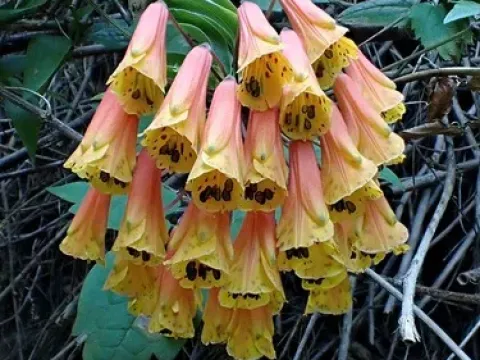
Bomarea
Bomarea
Sowing Bomarea seeds is a delicate process that often requires cold stratification to break dormancy. The best time to start is late winter, allowing the seedlings to establish a strong root system before the warm summer months.
What the section contains


Bomarea
Seeds should be sown in a well-drained, light potting mix at a depth of about one centimeter. A stable temperature around 18–20 degrees Celsius is essential for successful germination.
Covering the seed trays with plastic or glass helps maintain the humidity needed for sprouting. However, ventilation should be monitored to prevent the development of mold on the soil surface.
Once the seedlings have developed two sets of true leaves, they should be carefully pricked out. Care must be taken not to disturb the fragile root tubers during this transfer process.
Vegetative propagation via tuber division is also common. This is best performed during the dormant season to ensure the plant can focus its energy on new growth rather than recovering from stress.
Bomarea belongs to the Alstroemeriaceae family and originates from the mountainous tropical regions of Central and South America. They thrive in cooler, high-altitude climates with consistent moisture.
These plants prefer partial shade and protection from the intense midday sun, which can cause leaf scorch. A spot with bright, dappled light is considered ideal for their overall development.
The soil must be rich in organic matter and possess excellent drainage. These plants dislike heavy clay soils that retain excess moisture, as this leads to the rapid rotting of their tuberous root systems.
As climbing vines, they require structural support to thrive. Providing trellises, nets, or wire supports allows the plant to reach its full height and ensures better air circulation among the foliage.
Regular watering is necessary throughout the growing season. While the soil should stay moist, it should never become waterlogged, particularly during the dormant period when the plant requires very little water.
The primary pests affecting Bomarea include spider mites and aphids, which flourish in low-humidity environments. These pests can rapidly weaken the plant by feeding on the sap of young shoots.
Mealybugs are another potential threat, often found in the leaf axils. Treatment with appropriate systemic insecticides is recommended as soon as an infestation is spotted to prevent further spread.
Fungal issues, specifically root rot, are the most significant threats to the long-term health of the plant. Maintaining proper soil drainage and avoiding overwatering are the best preventative measures.
Powdery mildew can occur if air circulation is restricted. Pruning back dense growth and ensuring the plant has enough space to breathe helps to significantly lower the risk of fungal outbreaks.
Viral infections, indicated by stunted growth or variegated patterns that are not characteristic of the plant, require swift action. Affected plants should be destroyed to protect other specimens.