
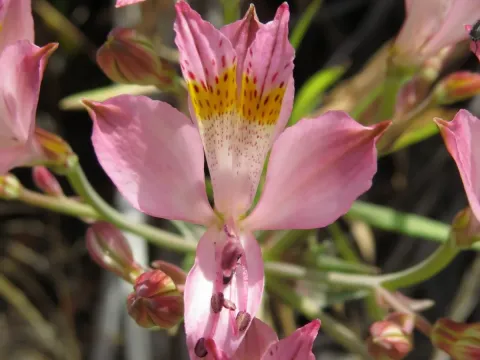
Alstroemeria angustifolia
Alstroemeria angustifolia
Alstroemeria angustifolia is a perennial herbaceous plant belonging to the Alstroemeriaceae family. Originating from the mountainous regions of Chile, it has evolved to thrive in specific cool-climate conditions with well-drained soils.
What the section contains
Alstroemeria angustifolia
For successful cultivation, the soil must be rich in organic matter and have an acidic to neutral pH. Proper drainage is the most critical requirement, as the fleshy root system is highly susceptible to root rot caused by waterlogged substrates.
The plant performs best at moderate temperatures ranging from 15 to 20 degrees Celsius. In greenhouse environments, maintaining consistent light intensity and day length is essential to ensure high-quality flower production and uniform stem development.
Watering should be managed carefully to ensure moisture is available without oversaturating the root zone. During peak growth, regular liquid feeding with potassium-rich fertilizers is necessary to support the energy-intensive process of blooming.
Winter protection is crucial in non-native climates. While the rhizomes can withstand light frost, they must be insulated against deep freezing, often requiring mulching or indoor storage for better overwintering success.
Rhizoctonia and Phytophthora are primary pathogens that affect the root system, often leading to rapid plant decline. These issues are typically prevented through sterile growing media and strict control over irrigation cycles.
Thrips are the most notorious pests affecting this crop, causing significant damage by feeding on young tissue and spreading viruses. Integrated pest management, including sticky traps and biocontrols, is often required.
Two-spotted spider mites tend to flourish when humidity levels drop too low. Regular monitoring of the underside of leaves and keeping humidity within recommended ranges helps minimize mite infestations.
Aphids can cause stunted growth and yellowing of foliage by extracting plant sap. Regular inspection of new growth allows for early intervention using targeted horticultural soaps or systemic insecticides.
Botrytis blight may affect flowers and leaves in high-humidity conditions. Maintaining good air circulation within the greenhouse is a key agronomic practice to reduce the incidence of this fungal disease.
Harvesting should occur when the first one or two buds on the inflorescence begin to show color. This stage allows the flowers to continue opening in the vase while maximizing the shelf life of the cut stems.
Instead of cutting with a blade, growers typically pull the stems upward from the base. This technique naturally separates the stem from the rhizome and encourages the plant to produce more replacement shoots from its base.
Immediate post-harvest cooling is vital to remove field heat and lower the respiration rate of the flowers. This significantly extends the vase life and maintains the turgidity of the petals during storage and transit.
Stems are graded based on length, flower count, and overall uniformity. Proper post-harvest solutions in the buckets are recommended to prevent bacterial growth in the water, which can block the xylem and cause wilting.
For commercial shipping, stems are bunched in sets of 10 or 20 and sleeved in plastic to protect them from mechanical damage. Proper ventilation during transport is essential to prevent moisture accumulation and fungal growth.