
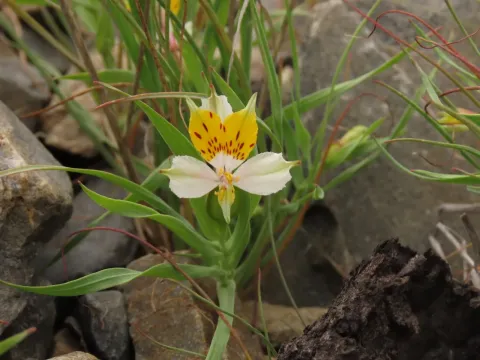
Alstroemeria graminea
Alstroemeria graminea
Alstroemeria graminea is a distinct perennial plant species belonging to the Alstroemeriaceae family. Native to the high-altitude regions of Chile, this species is noted for its grass-like appearance, which distinguishes it from the more common broad-leaved varieties found in the market.
What the section contains
Alstroemeria graminea
Botanically, the plant features elongated, narrow foliage and a fleshy root system consisting of tubers that serve as storage organs. These tubers are essential for the plant's survival in its natural alpine environment, allowing it to withstand extreme temperature fluctuations and dry periods.
Successful commercial cultivation requires well-draining soil with an acidic to neutral pH balance. Growers typically use a mixture of peat, perlite, and sand to ensure that the root zone remains aerated, preventing the buildup of excess moisture that can lead to rapid decay.
Temperature management is a critical aspect of its agrotechnology. The plant thrives in cool to moderate environments, requiring consistent light levels to maintain the integrity of its narrow leaves. In greenhouse production, artificial lighting is often utilized to compensate for reduced winter daylight hours.
The primary economic use of this plant is in the professional cut-flower industry. Its delicate, grass-like texture provides unique structural elements in floral design, making it highly valued for sophisticated arrangements where a natural, organic look is requested by modern consumers.
The most significant pathological threats to the crop include Rhizoctonia and Pythium root rots. These diseases are almost exclusively triggered by improper irrigation practices and poor substrate drainage, making the environment conducive to fungal development within the root system.
Insect pests such as spider mites and thrips are persistent problems in controlled environment agriculture. Because Alstroemeria graminea has sensitive foliage, integrated pest management programs that prioritize biological controls over harsh chemical sprays are recommended for long-term health.