
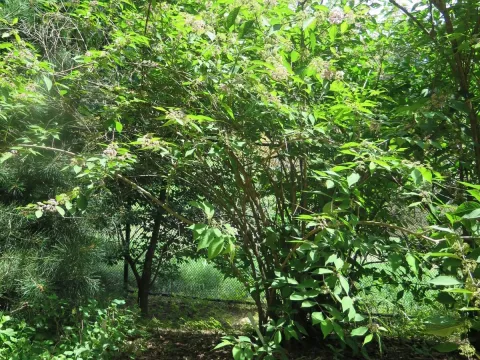
Beautyberry
Callicarpa bodinieri H. Lev.
Callicarpa bodinieri, commonly known as the beautyberry, is a deciduous shrub belonging to the Lamiaceae family. Native to western and central China, it is widely celebrated in horticulture for its spectacular display of clustered, vivid violet-purple fruits that persist well into late autumn and early winter.
What the section contains
Beautyberry
The shrub thrives in positions with full sun to partial shade. To achieve the best fruit production, it is essential to plant it in a sheltered spot protected from strong, cold winds. The soil should be fertile, moist, and well-drained, as the plant is sensitive to waterlogged conditions that can compromise root health.
Regarding climate, Callicarpa bodinieri is relatively hardy. While it can withstand moderate frosts, it benefits from a layer of organic mulch around the base during the winter months. In regions with harsh winters, young plants should be protected to prevent significant dieback of the stems.
General care involves annual pruning in early spring to remove dead wood and encourage new growth. Since the berries are produced on new wood, pruning also helps in maintaining a manageable size and improving the overall aesthetic shape of the shrub. Fertilizing with balanced organic matter in spring supports vigorous growth.
In landscaping, this species is highly versatile, often used in shrub borders or as a striking feature plant. It is particularly effective when planted in groups, which not only improves cross-pollination leading to heavier fruit sets but also creates a dramatic visual impact during the dormant season.
The beautyberry is generally robust, but it can be susceptible to fungal issues such as leaf spot or powdery mildew. These problems are typically exacerbated by poor air circulation or excessively high humidity, making timely thinning of branches an important preventive measure.
Pest problems are usually minor, though aphids can sometimes cluster on the undersides of new leaves during the spring. Monitoring and using horticultural oils or insecticidal soap are effective methods for managing localized infestations without damaging the plant's delicate foliage.