
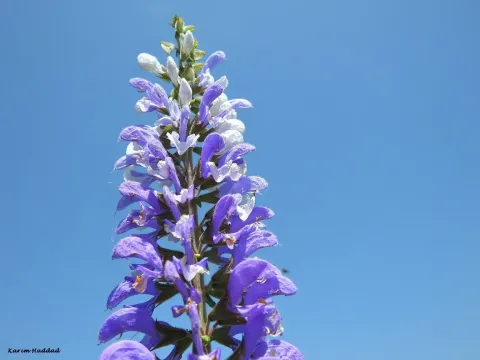
Barrelier's Sage
Salvia barrelieri
Sowing of Salvia barrelieri should occur in the spring once the soil temperature is consistently above 10 degrees Celsius to ensure healthy germination.
What the section contains
Barrelier's Sage
Starting seeds in greenhouse trays about two months before the last frost is recommended to produce vigorous transplants ready for field establishment.
When direct seeding is preferred, place the seeds at a depth of approximately 1 centimeter, ensuring sufficient seed-to-soil contact for hydration.
Maintain consistent row spacing of at least 50 centimeters to allow for adequate airflow and to facilitate mechanized weed management operations.
Seedlings benefit from uniform moisture during the initial weeks, though once established, the plants demonstrate excellent drought-resilient characteristics.
Salvia barrelieri, a member of the Lamiaceae family, thrives in well-drained, alkaline-to-neutral soils that provide good aeration for its root system.
The crop is highly light-demanding, requiring full sun exposure throughout the growing season to reach its full potential in biomass and secondary metabolites.
While the plant is quite hardy, it prefers regions with a Mediterranean-like climate, avoiding excessively humid conditions that can lead to crown rot.
Moderate fertility is ideal; excessive nitrogen application can lead to rapid, succulent growth that is more susceptible to disease and pests.
Adequate soil structure is paramount, as the roots do not tolerate standing water, which can quickly lead to plant mortality in heavy, clay-based soils.
Fungal diseases such as powdery mildew represent the most significant threat to this species, especially in areas with poor ventilation or high humidity levels.
Insect pests, including aphids and leaf beetles, can occasionally damage foliage, necessitating regular scouting to manage populations before they explode.
Practicing crop rotation is essential to prevent the accumulation of soil-borne pathogens that thrive in the root zone of Lamiaceae crops over multiple years.
Weed competition is a major challenge during the early seedling stage, requiring diligent cultivation or mulching to ensure the sage is not smothered.
Integrated pest management strategies focusing on biological control are highly effective for maintaining the health of this aromatic and medicinal plant.
Harvesting should be timed precisely with the peak of the flowering phase, as this is when the essential oil profile is most concentrated and high quality.
The aerial portions of the plant are typically harvested by cutting, leaving sufficient growth at the base to ensure the plant can survive for future seasons.
Proper drying technique is critical; use a dark, well-ventilated space with controlled temperatures to prevent the degradation of volatile aromatic compounds.
Once dried, the leaves are separated from the woody stems, cleaned of debris, and graded based on color, texture, and aromatic potency for market standards.
Store the final product in airtight containers in a cool, dark environment to preserve the chemical integrity and market value of the harvested plant material.