
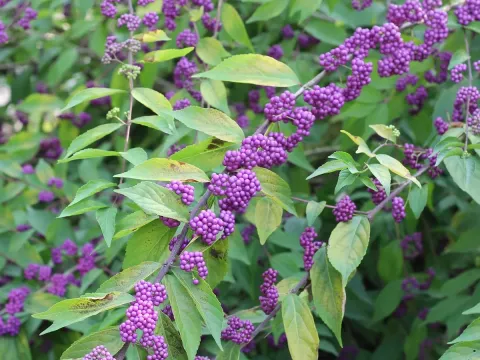
Beautyberry hybrid
Callicarpa hybrids
The beautyberry hybrid (Callicarpa hybrids) is a deciduous ornamental shrub belonging to the Lamiaceae family. These hybrids are specifically bred by crossing various species, such as Callicarpa bodinieri, to enhance the visual appeal of the berries and increase cold hardiness in various temperate environments.
What the section contains
Beautyberry hybrid
Originating from East Asian botanical ancestors, these plants thrive in locations with sufficient sunlight and protection from harsh winter winds. While they can tolerate partial shade, full sun exposure is generally required for the plant to produce its signature vibrant, metallic-violet berry clusters in late autumn.
The plant requires well-drained, fertile soil with a neutral to slightly acidic pH. Poor drainage is the most significant constraint for beautyberry growth; therefore, amending heavy soils with organic matter or gravel is highly recommended to prevent waterlogging and subsequent root decay.
Proper agronomic management involves regular watering during the first growing seasons until the root system is well-established. Mulching around the base is essential to maintain soil moisture levels and protect the roots from extreme temperature fluctuations during the transition between seasons.
Annual pruning is a cornerstone of maintenance for these hybrids. Gardeners should prune the branches back in early spring to stimulate new growth, as the flowers and subsequent berries develop on the current season's wood, ensuring a prolific display of fruit each year.
Beautyberry hybrids are generally considered robust plants with low susceptibility to severe diseases. However, in humid or poorly ventilated environments, they can occasionally be affected by powdery mildew, which appears as a white, powdery growth on the leaf surfaces.
Pests are generally limited to common garden intruders, primarily aphids and spider mites. These can be particularly problematic during prolonged dry spells when the plant is stressed and its natural defense mechanisms are weakened.
Management strategies involve maintaining appropriate plant spacing to ensure adequate airflow, which significantly reduces the risk of fungal outbreaks. Clean cultivation and the removal of garden debris help minimize overwintering sites for potential pests.
When infestation levels exceed the threshold, targeted applications of horticultural oils or organic soap sprays are often sufficient to control aphids and mites without causing significant harm to the surrounding ecosystem.
Proactive monitoring remains the most effective form of plant protection. Regularly checking the undersides of leaves and the condition of the stems allows for early intervention, keeping the shrub healthy and aesthetically pleasing throughout the autumn season.