
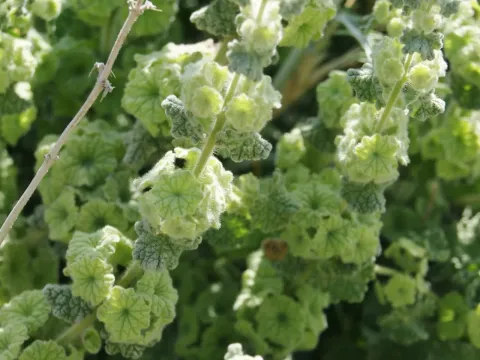
Ballota undulata
Ballota undulata
Ballota undulata is a perennial herbaceous plant belonging to the Lamiaceae family. While not a large-scale commercial staple, it is increasingly cultivated by herb growers for its medicinal and ornamental value.
What the section contains
Ballota undulata
The sowing process typically begins in early spring. Seeds require stratification to break dormancy; keeping them in cold storage for several weeks significantly improves germination rates when temperatures reach 15–20 degrees Celsius.
Direct sowing in the field is possible in well-drained, prepared beds. However, greenhouse production is preferred to ensure a high survival rate of seedlings before transplantation into open soil.
Seeds should be covered with a very thin layer of fine soil or vermiculite, as they require some exposure to light to trigger germination effectively. Soil moisture must be maintained consistently during the initial two-week period.
Transplanting is carried out once the seedlings are strong enough, usually after 6–8 weeks of growth. Adequate spacing of 40 centimeters apart is necessary to ensure proper airflow and growth development.
This plant thrives in full sunlight, which is crucial for maximizing the essential oil content within its foliage. It is highly resistant to heat and dry weather, reflecting its native Mediterranean habitat.
The ideal soil for Ballota undulata is light, sandy, or rocky, with excellent drainage properties. It performs poorly in heavy, clay-based soils that tend to trap water, leading to root problems.
It prefers a slightly alkaline or neutral soil pH. Although it can grow in nutrient-poor soils, a moderate application of organic mulch helps retain just enough moisture while preventing excessive dampness around the stem base.
Temperature tolerance is high, but the plant is sensitive to sustained freezing temperatures combined with high humidity. In cold climates, winter protection for the root zone is highly recommended.
Watering should be managed carefully; this species is better adapted to periodic drought than to waterlogged conditions. Deep watering, followed by soil drying, promotes a deep and healthy root system.
Fungal pathogens are the primary concern for this crop, especially in humid or stagnant air environments. Powdery mildew can manifest as a white film on leaves if the planting density is too high.
Root rot is a major threat caused by over-irrigation. If the roots remain in saturated soil, they quickly decay, leading to the collapse of the entire plant. Proper soil drainage is the best defense against this.
Pests like aphids and spider mites may target the plant during hot, dry summer months. Monitoring is essential, and any infestation should be addressed early using neem oil or insecticidal soap.
Stem borers may occasionally cause damage by feeding internally on the stems, leading to wilting. Affected parts should be pruned immediately to stop the pest from spreading throughout the planting area.
Cultural practices such as removing fallen leaves and maintaining weed-free zones around the plants are vital for preventing the buildup of spores and larvae that overwinter in plant debris.
Harvesting is best conducted during the peak flowering stage when the plant is most concentrated with essential compounds. This timing ensures the highest quality of therapeutic properties.
Using sharp shears, the stems should be cut about 15 centimeters above the soil line. This pruning technique allows the plant to recover and produce a second flush of growth during the same growing season.
The harvested stems must be dried quickly in a cool, dark, and well-ventilated location. Drying at high heat is discouraged, as it strips the foliage of its delicate volatile oils and aromatic profile.
Once fully dried, the material should be processed to remove hard, woody stalks. The remaining leaf and flower mixture is then stored in airtight containers to preserve potency and prevent moisture absorption.
Uses include the production of herbal tinctures, infusions, and specialized beauty products. Its efficacy as an antiseptic and traditional medicinal agent makes it a valuable niche crop for herb producers.