
Ballota philistaea
Ballota philistaea
Ballota philistaea is a perennial herbaceous plant belonging to the Lamiaceae family. Native to the Eastern Mediterranean, particularly the Levant region, this plant has evolved to thrive in arid and semi-arid environments characterized by harsh sun and limited rainfall.
What the section contains
Ballota philistaea
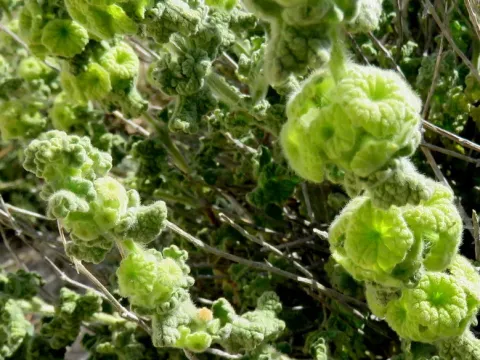
The plant exhibits remarkable adaptations to dry conditions, most notably the dense pubescence on its leaves and stems. This physical feature minimizes transpiration losses and protects the internal tissues from the intense solar radiation typical of its natural habitat throughout the growing season.
Agronomically, Ballota philistaea requires well-drained, porous soils. It performs best in limestone or gravelly substrates that prevent water stagnation. Poor drainage is the most significant limiting factor for its cultivation, as the roots are highly susceptible to rot if kept in saturated conditions.
The plant requires full sun exposure to maintain its chemical profile and structural integrity. Shaded conditions lead to etiolation and a marked decrease in the secondary metabolites, such as essential oils and flavonoids, which are often the target harvest components in commercial cultivation.
In terms of soil fertility, the plant is relatively undemanding, as it is adapted to nutrient-poor soils. Excessive nitrogen fertilization is discouraged, as it promotes rapid but succulent growth that is more vulnerable to pathogens and reduces the plant's natural hardiness and medicinal potency.
The primary threats to Ballota philistaea are fungal pathogens that flourish in environments with poor air circulation and excessive humidity. Powdery mildew is a frequent issue, especially in dense planting schemes where the lack of airflow allows spores to proliferate on leaf surfaces.
Root rot and crown rot represent major risks, typically associated with overwatering or heavy, compact soils. To mitigate these risks, agricultural managers should prioritize deep, infrequent irrigation techniques or utilize automated drip systems to maintain optimal soil moisture levels without surface water accumulation.
Pests such as aphids and spider mites can infest the plant, particularly during the early vegetative stage. These insects suck sap from the leaves, causing chlorosis and stunted growth. Integrated pest management (IPM) strategies, including the introduction of natural predators, are recommended to maintain plant health.
Weed management is critical during the establishment phase, as young plants compete poorly with vigorous grasses and broad-leaved weeds. Mechanical cultivation or mulching with inorganic materials is often preferred to organic mulch, which could increase humidity around the plant base.
Crop rotation protocols should be strictly followed to prevent the buildup of soil-borne pathogens and nematode populations. Rotating with non-Lamiaceae crops every few years helps stabilize the soil health and ensures the long-term productivity of the plantation site.