
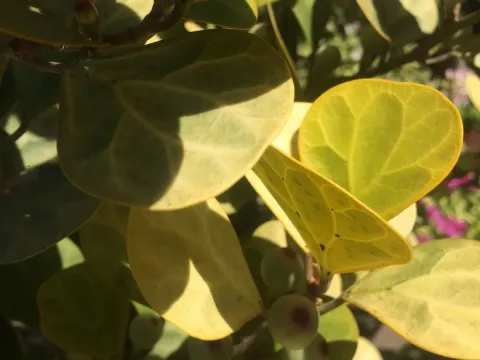
Mistletoe fig
Ficus deltoidea Jack
Ficus deltoidea, commonly known as the Mistletoe fig, is a member of the Moraceae family. It is an evergreen shrub or small tree, notable for its distinctively shaped, leather-like leaves that are triangular or delta-shaped. The foliage often features small, decorative dots, making it a popular choice for indoor ornamental displays.
What the section contains
Mistletoe fig
Native to Southeast Asia, including Malaysia and the Philippines, this species typically grows in humid tropical forests. In its natural habitat, it often exhibits epiphytic or lithophytic growth habits, allowing it to thrive in nutrient-poor crevices or on the branches of larger trees under a dense forest canopy.
For successful cultivation, indoor temperatures should be kept between 20–25 °C. The plant is highly sensitive to cold drafts and sudden temperature fluctuations, which often lead to premature leaf drop and overall decline in plant health. A stable environment is essential for maintaining its evergreen nature.
The soil substrate must be well-draining and slightly acidic. A mix consisting of peat moss, pine bark, and coarse perlite or sand is generally ideal, as it ensures proper oxygen circulation around the root system. Proper drainage is crucial to prevent the accumulation of excess water, which could lead to root rot.
Bright, indirect light is necessary for optimal photosynthesis and compact growth. While the plant can tolerate some morning sun, intense afternoon direct light may scorch the foliage. In lower light conditions, the plant will survive but its growth rate will significantly slow down, and the leaf markings may become less defined.
Spider mites and scale insects are the primary pests that affect Ficus deltoidea, particularly in dry indoor conditions. Regular monitoring of the undersides of the leaves and maintaining adequate humidity levels are the best preventative measures against these common infestations.
Root rot caused by fungal pathogens is a significant threat when soil moisture levels are not managed correctly. If the soil remains waterlogged for extended periods, the root structure begins to decay, often requiring the complete repotting of the specimen into fresh, dry substrate and the removal of affected roots.