

Reference · Crops
Ficus
Ficus L.
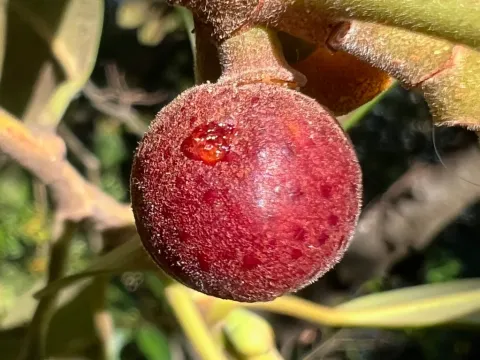
Ficus (Ficus L.) is a diverse genus belonging to the Moraceae family. It comprises various forms, including trees, shrubs, and climbers, which are predominantly found in tropical and subtropical ecosystems worldwide.
30
items
What the section contains
 Fig
Ficus carica L.
1 product
Fig
Ficus carica L.
1 product
 American fig
Ficus americana Aubl.
American guiana fig
Ficus americana Aubl. subsp. guianensis (Ham.) C. C. Berg
American fig
Ficus americana Aubl.
American guiana fig
Ficus americana Aubl. subsp. guianensis (Ham.) C. C. Berg
 Banyan fig
Ficus benghalensis L.
Banyan fig
Ficus benghalensis L.
 Benjamin fig
Ficus benjamina L.
Benjamin fig
Ficus benjamina L.
 Binnendijk's Fig
Ficus binnendijkii Miq
Binnendijk's Fig
Ficus binnendijkii Miq
 Creeping fig
Ficus pumila L.
Creeping fig
Ficus pumila L.
 Elephant ear fig
Ficus auriculata Lour.
Elephant ear fig
Ficus auriculata Lour.
 Ficus brachypoda
 (Miq.) Miq.
Ficus brachypoda
Ficus brachypoda (Miq.) Miq.
 Ficus bussei
 Warb. ex Mildbr. & Burret
Ficus bussei
Ficus bussei Warb. ex Mildbr. & Burret
 Ficus cyathistipula
 Warb.
Ficus cyathistipula
Ficus cyathistipula Warb.
 Ficus lingua
 warb ex De Wildeman & T. Dur
Ficus lingua
Ficus lingua warb ex De Wildeman & T. Dur
 Ficus maclellandii
Ficus maclellandii
Ficus maclellandii
 Ficus microcarpa
 L. f.
Ficus microcarpa
Ficus microcarpa L. f.
 Ficus obliqua
 G. Forst.
Ficus obliqua
Ficus obliqua G. Forst.
 Ficus petiolaris
 Kunth
Ficus petiolaris
Ficus petiolaris Kunth
 Ficus punctata
 Thunb.
Ficus punctata
Ficus punctata Thunb.
 Ficus stricta
 (Miq.) Miq.
Ficus stricta
Ficus stricta (Miq.) Miq.
 Fiddle-leaf fig
Ficus lyrata Warb.
Fiddle-leaf fig
Ficus lyrata Warb.
 Mistletoe fig
Ficus deltoidea Jack
Mistletoe fig
Ficus deltoidea Jack
 Moreton Bay fig
Ficus macrophylla Desf. ex Pers.
Moreton Bay fig
Ficus macrophylla Desf. ex Pers.
 Natal fig
Ficus natalensis Hochst.
Natal fig
Ficus natalensis Hochst. subsp. leprieurii (Miq.) C. C. Berg
Natal fig
Ficus natalensis Hochst.
Natal fig
Ficus natalensis Hochst. subsp. leprieurii (Miq.) C. C. Berg
 Rubber fig
Ficus elastica Roxb. ex Hornem.
Rubber fig
Ficus elastica Roxb. ex Hornem.
 Rusty-leaved fig
Ficus rubiginosa Desf. ex Vent.
Rusty-leaved fig
Ficus rubiginosa Desf. ex Vent.
 Sacred fig
Ficus religiosa L.
Sacred fig
Ficus religiosa L.
 Sagittate-leaved Fig
Ficus sagittata Vahl
Sagittate-leaved Fig
Ficus sagittata Vahl
 Sarmentose fig
Ficus sarmentosa Buch.-Ham. ex Sm.
Sarmentose fig
Ficus sarmentosa Buch.-Ham. ex Sm.
 Thunberg's sarmentose fig
Ficus sarmentosa Buch.-Ham. ex Sm. var. thunbergii (Maxim.) Corner
Thunberg's sarmentose fig
Ficus sarmentosa Buch.-Ham. ex Sm. var. thunbergii (Maxim.) Corner
 Umbrella fig
Ficus umbellata Vahl.
Umbrella fig
Ficus umbellata Vahl.
Marketplace
Products in this section · 4


Ficus
Successful cultivation requires a stable thermal environment, typically ranging from 18°C to 25°C. The species is sensitive to sudden drops in temperature and cold drafts, which can induce leaf drop and physiological stress.
The substrate must prioritize drainage and aeration. A soil mix containing organic matter, such as peat or leaf mold, supplemented with inorganic materials like perlite or sand, ensures optimal root zone conditions.
Light intensity is critical for the metabolic activities of the plant. While most species thrive in bright, indirect light, some require specific exposure levels to maintain variegation and vigorous growth patterns.
From an industrial perspective, the genus is utilized for fruit production, latex harvesting, and as a primary decorative element in commercial landscaping and interior plant-scaping due to its air-purifying qualities.
Common pests affecting this crop include spider mites, scale insects, and mealybugs. These pests thrive in indoor conditions, feeding on plant sap and potentially transmitting viral or fungal infections to the host.
Pathological issues such as root rot and leaf spot are predominantly linked to improper irrigation practices. Waterlogged soil prevents root respiration, creating an environment favorable for pathogenic soil-borne fungi.
Management strategies involve the application of integrated pest management (IPM) practices, emphasizing the use of horticultural oils, systemic insecticides, and strict hygiene protocols during plant maintenance.
Monitoring for early signs of disease is essential, as rapid intervention can prevent widespread infection. Maintaining optimal environmental conditions significantly lowers the plant's susceptibility to opportunistic pathogens.
Proper sanitation of tools and pots, alongside isolating newly introduced plants, is crucial in large-scale production environments to prevent the spread of mites and persistent microbial colonies.