
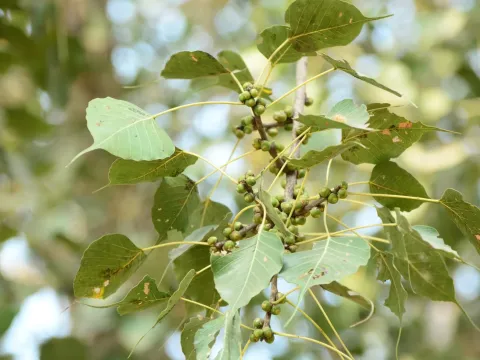
Sacred fig
Ficus religiosa L.
Sacred fig, scientifically known as Ficus religiosa, is a prominent member of the Moraceae family. It is a large, deciduous or semi-evergreen tree native to the Indian subcontinent and Indochina, where it holds significant cultural and botanical value.
What the section contains
Sacred fig
The tree thrives in tropical and subtropical climates, requiring average temperatures between 20 and 30 degrees Celsius. It is highly intolerant to freezing conditions and prefers regions where the temperature remains above 10 degrees Celsius throughout the year.
Successful cultivation requires deep, well-draining soil with high organic matter content. While it can adapt to various soil types, loamy, nutrient-rich substrates are ideal for promoting rapid growth and the development of its expansive root system.
Light intensity is a critical factor for Ficus religiosa. It prefers full sun exposure, which ensures the maintenance of its dense, heart-shaped leaf canopy. While young saplings can tolerate partial shade, mature trees require significant light for optimal photosynthesis.
Adequate moisture is essential, especially during the peak growing season. However, waterlogging must be avoided, as it leads to root decay. A consistent irrigation schedule, complemented by humidity management, is vital for the tree's overall vigor.
Common pests affecting Sacred fig include spider mites, mealybugs, and scale insects, which often thrive in dry and inadequately ventilated environments.
Fungal infections, such as leaf spot diseases and root rot, are frequent threats, particularly when the root zone is kept constantly waterlogged or when air circulation is poor.
Integrated pest management strategies, involving biological control agents and targeted systemic insecticides, are recommended for maintaining tree health in agricultural settings.
Nutrient deficiencies, particularly lack of nitrogen or magnesium, can manifest as yellowing leaves and reduced growth rates, requiring soil testing and appropriate fertilization.
Regular sanitation, including the removal of dead or decaying branches, is crucial to prevent the spread of diseases and to encourage healthy new growth during the spring season.