
Rubber fig
Ficus elastica Roxb. ex Hornem.
Description
Growing requirements
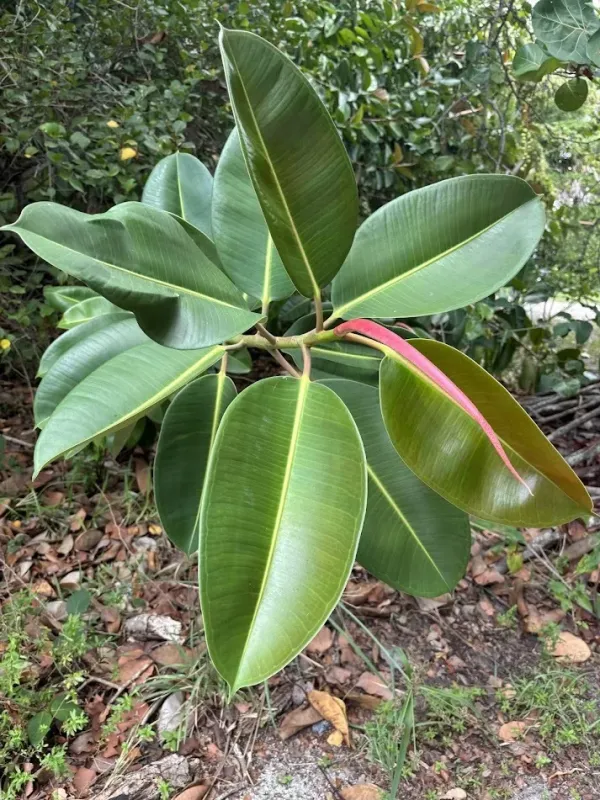
The Rubber fig (Ficus elastica Roxb. ex Hornem.) belongs to the Moraceae family. Originally from the tropical forests of South and Southeast Asia, it is a sturdy evergreen tree known for its ornamental foliage.
Optimal growth conditions include temperatures between 20°C and 25°C. The plant dislikes sudden cold drafts and temperature fluctuations, which often result in leaf drop and reduced vigor.
The ideal soil should be well-draining, nutrient-rich, and slightly acidic. Proper drainage is essential to prevent waterlogging, which the plant's root system is highly sensitive to.
The rubber fig thrives in bright, indirect light. While it can tolerate some lower light levels, direct sunlight can cause leaf scorch, especially during peak afternoon hours in the summer.
Regular maintenance involves wiping the leaves with a damp cloth. This practice not only keeps the plant clean but also helps prevent dust buildup, which can obstruct the stomata and inhibit photosynthesis.
Yield
The species was historically cultivated as a significant source of commercial latex. Although it has been largely superseded by Hevea brasiliensis, it remains an economically important nursery crop.
In modern horticulture, the rubber fig is highly prized as a decorative indoor plant. It is widely used in residential and commercial spaces for its architectural shape and air-purifying qualities.
Propagation is generally achieved through stem cuttings or air layering in controlled greenhouse environments. Success depends on maintaining high humidity and a stable ambient temperature during the rooting process.
Pruning is a crucial management practice. Removing the apical meristem encourages the development of lateral branches, allowing growers to create fuller, more compact specimens for the consumer market.
Fertilization with a balanced NPK ratio during the growing season supports the development of large, glossy leaves and maintains the overall vitality of the plant.
Main diseases and pests
Common pests include scale insects and mealybugs, which often hide in the crevices of the stem and leaf axils. They feed on plant sap, leading to weakened growth and stunted development.
Spider mites are a frequent problem in dry indoor conditions. Infestations are typically characterized by fine webbing and a stippled, pale appearance on the leaves.
Fungal leaf spot diseases are usually associated with high humidity, poor air circulation, and moisture sitting on the foliage for extended periods. This can cause unsightly blemishes and necrotic patches.
Root rot is the most common pathology resulting from overwatering or inadequate soil aeration. It often manifests as sudden leaf yellowing and stem softening at the soil line.
- Sanitize tools regularly to prevent pathogen spread.
- Ensure soil dries out slightly between watering sessions.
- Use appropriate horticultural oils or soaps to manage pest outbreaks.