
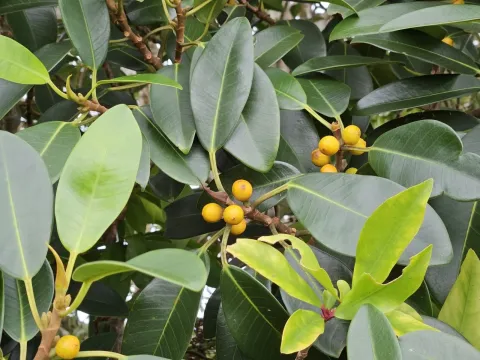
Rusty-leaved fig
Ficus rubiginosa Desf. ex Vent.
The Rusty-leaved fig (Ficus rubiginosa) is a prominent member of the Moraceae family. It originates from the eastern coastal regions of Australia, where it naturally develops into a large, evergreen tree with a dense crown.
What the section contains
Rusty-leaved fig
Cultivation requires bright, indirect light to maintain foliage vigor. In indoor environments, placing the plant near a light-filtering window is ideal to ensure photosynthesis without exposing leaves to scorching direct sunlight.
Soil quality is paramount for this species. It demands a well-draining substrate rich in organic matter. A mixture containing loam, peat, and coarse sand provides the necessary aeration for root health.
Regarding climate, the plant thrives in temperatures between +18°C and +26°C. It is sensitive to thermal shock, meaning that sudden changes in location or cold drafts must be avoided at all costs.
Hydration management involves allowing the top layer of the soil to become dry before applying additional water. This practice mimics natural seasonal fluctuations and prevents the onset of root-related issues caused by waterlogging.
Common pests include scale insects that attach themselves to stems and the undersides of leaves. These insects weaken the plant by extracting essential sap, which can cause leaf yellowing and stunted development.
Spider mites are a persistent threat, particularly in low-humidity environments. They cause stippling on the leaves and, if left unchecked, can lead to widespread defoliation of the plant.
Root rot is the most devastating disease affecting Ficus rubiginosa. It is predominantly triggered by overwatering and poor drainage, which creates an anaerobic environment suitable for fungal colonization.
Leaf spot pathogens can occur if moisture remains on the foliage for extended periods. Ensuring good air circulation around the crown helps to mitigate this risk significantly.
Effective management includes maintaining optimal plant hygiene, such as removing dead leaves and monitoring for pests during routine care. Fungicidal treatments should be applied only when specific symptoms are clearly identified.