
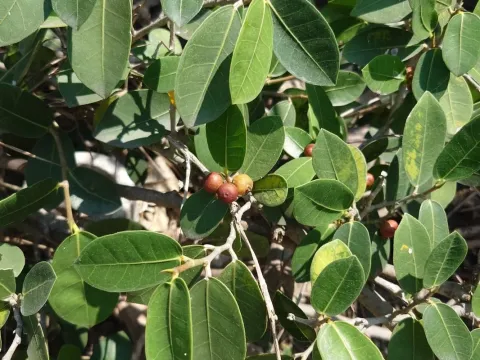
Dye fig
Ficus tinctoria
The dye fig (Ficus tinctoria) is a perennial woody plant belonging to the Moraceae family. It is widely known for its hemiepiphytic growth habit, where the plant often begins its life in the canopy of another tree before extending roots down to the ground to establish itself independently.
What the section contains
Dye fig
Originating from the tropical regions of Asia, Australia, and the Pacific Islands, this species thrives in humid forest environments. It requires a stable climate with temperatures ideally ranging between 22 and 28 degrees Celsius to sustain consistent year-round growth.
Regarding soil requirements, Ficus tinctoria prefers well-drained, nutrient-rich soils with organic matter. In agricultural settings, ensuring a slightly acidic to neutral soil pH is crucial for optimal nutrient uptake and general plant health throughout its lifecycle.
Agrotechnical management involves regular moisture maintenance and consistent fertilization during the active growing season. Pruning is frequently practiced to manage plant size and to promote the development of a healthy, robust branch structure suitable for various land-use purposes.
The economic value of this crop is primarily found in its fruits, which serve as a natural source of dyes. Beyond its use as a dye plant, Ficus tinctoria is highly regarded in agroforestry for its soil-binding properties and its role in providing habitat within its native range.
Common pests affecting the dye fig include scale insects and spider mites, which can cause significant damage to foliage. Integrated pest management strategies are recommended, including the use of biological control agents and targeted horticultural oils.
Fungal pathogens such as leaf spot and root rot are major threats caused by poor drainage and excessive humidity. Maintaining proper sanitation, removing infected plant parts, and avoiding over-irrigation are the best practices to mitigate these agricultural risks.