
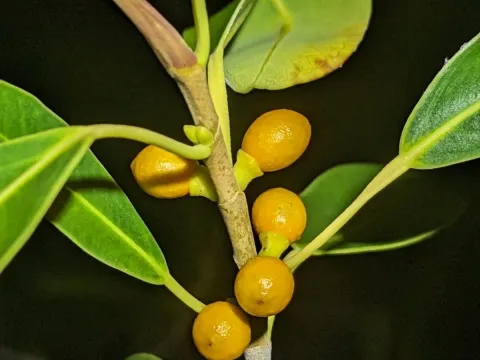
Ficus obliqua
Ficus obliqua G. Forst.
Ficus obliqua, commonly known as the small-leaved fig, belongs to the Moraceae family. It is a large evergreen tree native to the tropical and subtropical regions of eastern Australia, New Guinea, and various Pacific islands.
What the section contains
Ficus obliqua
In its native habitat, this species often starts as an epiphyte, germinating in the canopy of other trees before growing downward to form a massive, complex root system. It thrives in high-humidity environments and well-drained, nutrient-rich soils.
To successfully cultivate Ficus obliqua, one must ensure a consistent supply of bright, indirect light. While the species is somewhat shade-tolerant, optimal growth and foliage density are achieved under conditions of high ambient light.
Temperature management is critical; the plant is sensitive to frost and sudden cold drafts. It performs best in environments where temperatures remain stable, reflecting its origin in warm, tropical lowland forests.
The soil requirement includes a mixture that allows for excellent drainage while maintaining adequate moisture levels. Incorporating organic matter, such as compost or peat, is beneficial for mimicking its natural forest-floor environment.
Ficus obliqua is susceptible to several common pests, most notably scale insects and aphids. These pests cluster on the undersides of leaves and stems, requiring immediate treatment with horticultural oils or systematic insecticides.
Spider mites are a frequent problem in indoor or controlled environments where the air is dry. Maintaining high relative humidity through regular misting is an effective preventative measure against these microscopic pests.
Root rot caused by overwatering is a significant threat to the health of the tree. Ensuring that the potting medium dries out slightly between waterings is essential to preventing the spread of fungal pathogens.
Leaf spots caused by fungal infections can occur if there is insufficient airflow around the canopy. Providing adequate spacing between plants and ensuring good ventilation helps mitigate this risk significantly.
Any sudden change in light or water availability often leads to temporary stress, manifesting as leaf drop. A consistent management routine is the most reliable way to protect the plant from environmental disorders.