
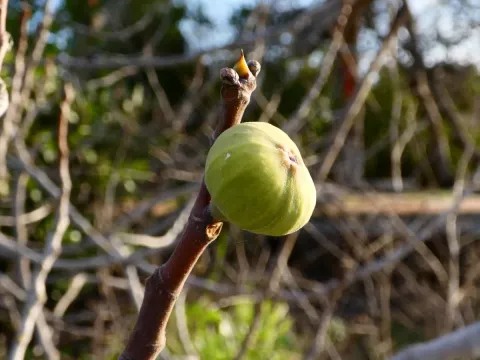
Fig
Ficus carica L.
The fig tree (Ficus carica L.) is a perennial deciduous plant belonging to the Moraceae family. Native to the Mediterranean region and Southwest Asia, it has been cultivated for millennia for its sweet, nutritious fruits and its adaptability to warm, temperate climates.
What the section contains
Fig
The plant thrives in full sun, which is essential for fruit sugar development and wood ripening. While fig trees can tolerate a range of temperatures, they are sensitive to hard frosts, which can damage the branches and reduce the following year's crop yield.
Soil requirements for fig cultivation include well-drained, fertile soil. The tree is famously drought-tolerant due to its deep root system, yet it requires sufficient water during fruit expansion to ensure consistent quality and size.
Botanically, the fig is unique because its flowers are hidden inside a receptacle called a syconium. Many commercial varieties are parthenocarpic, meaning they do not require pollination by the fig wasp to develop mature, edible fruit.
The fruit is used extensively in global food markets, available fresh, dried, or as preserves. Beyond culinary uses, fig extracts are used in pharmaceutical and cosmetic industries due to their high concentration of antioxidants and minerals.
Yield potential in fig orchards is influenced by pruning strategies and tree spacing. Modern commercial orchards utilize intensive planting systems to optimize light interception and facilitate efficient harvest operations.
An established, well-managed orchard can yield approximately 7 to 15 tons of fruit per hectare annually. Yields typically begin to reach commercial viability in the third or fourth year after planting, continuing for decades.
Pest management is critical in fig production. The fig moth and various beetle species can burrow into the fruit, causing significant quality loss. In some regions, nematodes can attack the root system, stunting tree growth.
Fungal diseases like leaf spot and fruit rot (Botrytis) are major threats, especially in high-humidity environments. Maintaining good airflow through proper pruning is the primary cultural control measure against these pathogens.
Integrated Pest Management (IPM) practices are encouraged, focusing on biological controls and minimal chemical usage. Monitoring programs for specific pests ensure that interventions are timely and environmentally responsible.
Harvesting figs is labor-intensive because the fruit does not ripen once removed from the tree. Only fruits that have developed full color and are slightly soft to the touch are picked, ensuring the highest sugar content.
Due to the short shelf life and delicate nature of fresh figs, they must be handled with extreme care and stored at low temperatures immediately after harvest. Packaging usually involves shallow trays to prevent bruising and squashing of the fruit.