
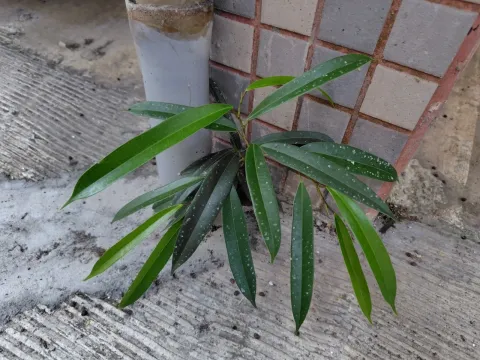
Ficus maclellandii
Ficus maclellandii
Ficus maclellandii, belonging to the Moraceae family, is a tropical evergreen tree native to Southeast Asia. Known for its slender, lanceolate leaves, it has become a popular choice for indoor cultivation due to its elegant growth habit and relative adaptability.
What the section contains
Ficus maclellandii
The plant thrives in temperatures ranging from 18 to 25 degrees Celsius and requires protection from cold drafts and sudden thermal fluctuations. Stability in the environment is crucial for maintaining foliage density and preventing leaf abscission during seasonal transitions.
Bright, indirect light is essential for the healthy development of this species, as intense direct sunlight may cause scorch marks on the leaves. When kept in low-light environments, the plant may exhibit stunted growth and an elongated, weak stem structure.
Cultivation requires a well-draining, nutrient-rich potting medium that prevents compaction. A standard mixture of peat, perlite, and organic compost provides an ideal environment for the roots to develop, ensuring proper oxygen exchange and moisture retention.
Consistent watering is necessary, allowing the top layer of soil to dry out between applications to prevent saturation. Maintaining a high level of humidity through regular misting or using a humidifier can significantly improve the overall vitality of the plant.
Spider mites are the most common pests affecting Ficus maclellandii, particularly in indoor environments with low humidity. Signs of infestation include fine webbing on leaf undersides and speckled, yellowing foliage, which can be managed by increasing humidity.
Root rot is a critical threat typically caused by overwatering or inadequate soil drainage. If the leaves begin to drop suddenly and the base of the stem feels soft, the plant must be removed from the container for root inspection and repotting in fresh substrate.
Mealybugs can often be found in the crevices where the leaves meet the stems, appearing as white, cotton-like masses. Manual removal using cotton swabs dipped in alcohol is an effective control measure for small infestations before they spread to other plants.
Fungal leaf spot diseases may occur when leaves are kept constantly wet or when there is insufficient ventilation. Proper air circulation and avoiding overhead watering are fundamental practices to reduce the likelihood of these pathogens taking hold.
Regular monitoring of the foliage is essential for early detection of issues, as healthy plants are better equipped to resist pest attacks and diseases. Maintaining a clean growing area and discarding dead plant debris helps eliminate potential hiding spots for pests.