
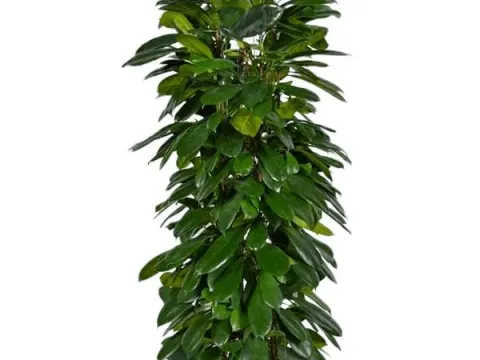
Ficus cyathistipula
Ficus cyathistipula Warb.
Ficus cyathistipula, a member of the Moraceae family, is a distinct species characterized by its large, leathery, dark green leaves. Often called the basket plant or African fig, it is widely appreciated in agriculture for its high ornamental value and structural aesthetics.
What the section contains
Ficus cyathistipula
Native to tropical Africa, this plant has adapted to high humidity and moderate forest light. In modern agricultural practice, it is cultivated primarily in controlled environments such as nurseries and commercial greenhouses for the horticultural trade.
The crop thrives in temperatures between 20°C and 25°C. It is sensitive to extreme cold and requires a stable, frost-free environment to maintain its growth rate and lush foliage density throughout the year.
Soil requirements involve a well-drained, nutrient-rich substrate, typically based on a mixture of peat, loam, and coarse sand. The pH level should be slightly acidic to neutral to ensure optimal nutrient uptake by the roots.
Agrotechnical maintenance involves consistent moisture management, ensuring the soil is never waterlogged, and providing periodic pruning to encourage dense branching. Fertilization should be focused on balanced macro-nutrients during the spring and summer seasons.
Common pests include scale insects, which appear as brown bumps on stems and leaf veins. These insects can significantly weaken the plant by extracting essential sap if left uncontrolled.
Spider mites represent a major threat in low-humidity environments, leading to leaf drop and general plant decline. Regular misting and proper air circulation are key methods to deter their infestation.
Root rot, driven by overwatering or poor soil drainage, is the most common physiological disorder affecting Ficus cyathistipula. It leads to leaf yellowing and can be lethal if the root zone does not dry out between waterings.
Mealybugs, identified by white, cotton-like masses, often cluster in leaf axils. Physical removal followed by insecticidal soap treatment is usually effective for small populations of these pests.
Systemic fungicides and targeted acaricides should be used at the first sign of severe infection. However, maintaining optimal hygiene and plant vigor remains the best defense against both diseases and insect pests.