
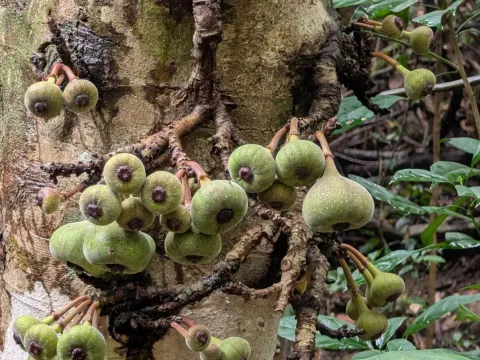
Elephant ear fig
Ficus auriculata Lour.
Ficus auriculata, commonly known as the Elephant ear fig, is a member of the Moraceae family. It is native to the diverse landscapes of Southeast Asia, ranging from the Himalayan foothills to the tropical forests of southern China.
What the section contains
Elephant ear fig
The plant thrives in deep, fertile soils that provide excellent drainage, as the roots are sensitive to waterlogging. It is typically grown in subtropical environments characterized by high humidity levels and consistent temperatures.
Botanically, it is recognized by its large, dramatic leaves that can measure up to half a meter in length. The species exhibits cauliflory, meaning its fruits (syconia) develop directly on the woody trunk and main branches rather than on smaller twigs.
Agricultural management requires careful attention to space, as the tree grows a wide, spreading crown. In nursery conditions, propagation is achieved through seeds or stem cuttings, ensuring the plants receive partial shade during their early growth stages.
Beyond its ornamental appeal, the Elephant ear fig serves as a source of edible fruit for local communities. The leaves are also commonly harvested for livestock fodder, highlighting the tree's versatility in agroforestry systems.
The primary pests affecting Ficus auriculata are scale insects and spider mites, which can cause significant damage to the foliage if left unchecked during the warmer seasons.
Fungal diseases like leaf spot and various types of root rot are frequent threats, especially in areas where soil drainage is inadequate or atmospheric humidity remains too high.
Preventative practices such as thinning the crown to improve airflow are essential to keep the tree healthy and reduce the risk of pathogen accumulation on the leaves.
It is recommended to monitor the underside of the leaves regularly, as this is where pests typically cluster before spreading across the entire plant structure.
Integrated pest management strategies involving the use of horticultural oils and neem-based treatments are highly recommended to keep the culture safe from common insect infestations.