
Binnendijk's Fig
Ficus binnendijkii Miq
Description
Growing requirements
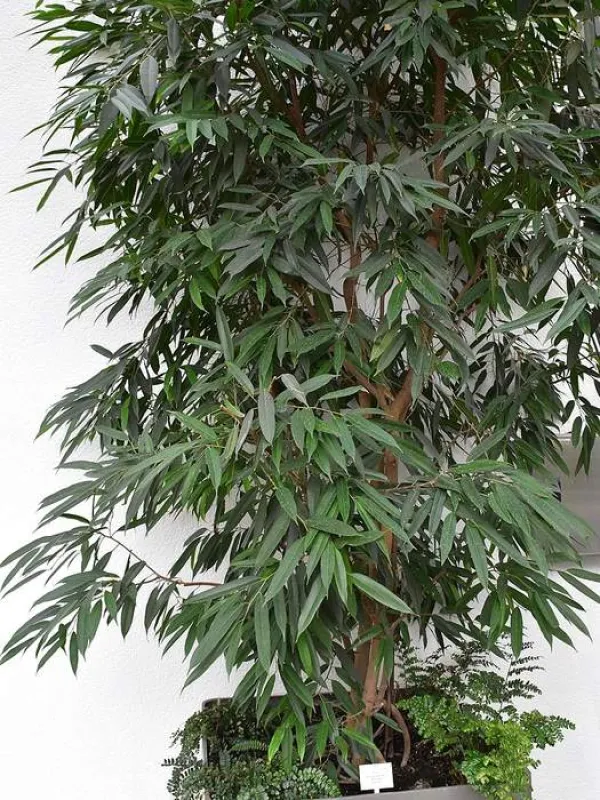
Ficus binnendijkii, commonly known as Binnendijk's fig, is a member of the Moraceae family. This evergreen species is native to the tropical regions of Southeast Asia, particularly the island of Java, where it thrives in humid, shaded forest environments.
The plant performs best in bright, indirect light conditions. While it can tolerate lower light levels, insufficient exposure often leads to leaf drop and a sparse canopy. It is essential to shield the plant from direct sunlight to prevent leaf scorching.
Maintaining a stable temperature between 20°C and 25°C is crucial for the optimal growth of this variety. It is highly sensitive to cold drafts and temperatures dropping below 15°C, which can cause physiological damage and significant foliage loss.
For successful cultivation, the growing medium must be well-draining, such as a peat-based potting mix amended with perlite or coarse sand. Proper drainage is the most critical factor in soil management, as stagnant water is lethal to the root system.
Regular watering is required during the active growing season, allowing the top layer of soil to dry out slightly before re-watering. High humidity is beneficial, so regular misting or using a pebble tray is recommended for indoor cultivation.
Main diseases and pests
Root rot is the most prevalent pathological threat to Ficus binnendijkii, typically caused by over-irrigation and compacted soil. It manifests as wilting, yellowing of foliage, and eventually necrosis of the stems, requiring immediate corrective action.
Scale insects are a frequent pest that attaches to the stems and the undersides of leaves. They extract sap, leading to stunted growth and the secretion of honeydew, which serves as a substrate for secondary fungal infections like sooty mold.
Spider mites are notorious pests in indoor environments with low humidity levels. They feed on plant cells, leaving characteristic yellow stippling on the leaves and thin webbing, which necessitates the use of acaricides and increased humidity.
Mealybugs, identified by their cottony white appearance in leaf axils, can infest the plant and compromise its health. Effective control involves manual removal and the application of horticultural oils or systemic insecticides to eradicate the infestation.
Effective prevention and disease management are built on consistent environmental monitoring. Maintaining plant hygiene by regularly cleaning the foliage ensures adequate gas exchange and allows for the early detection of any signs of biotic or abiotic stress.