
American trout lily
Erythronium americanum
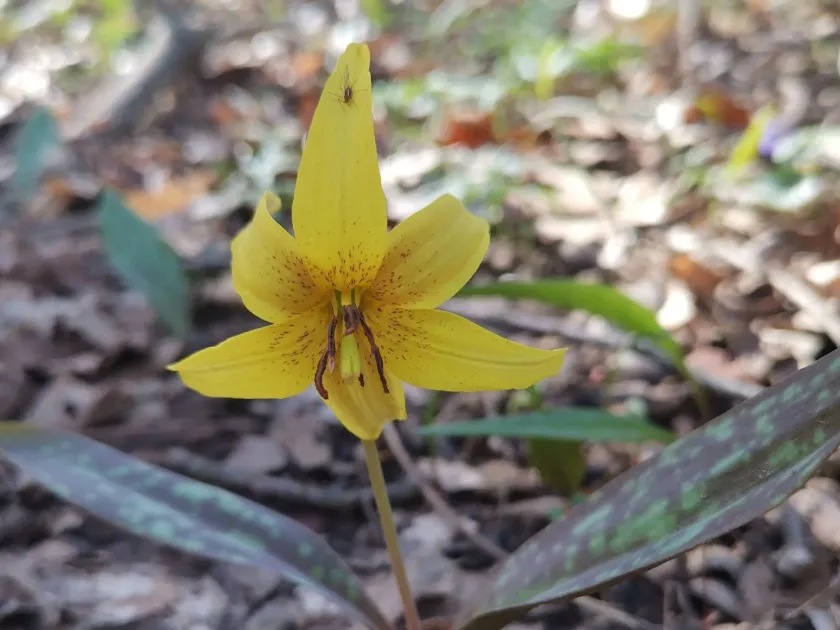
Description
Sowing dates
Sowing seeds of the American trout lily should be done immediately after collection in late spring or early summer, as they quickly lose viability when they dry out. Vegetative propagation remains the most reliable method for garden cultivation, involving the separation of bulblets from the parent bulb during the summer dormant period.
When propagating by seed, it is important to note that the plant has a slow development cycle. Seedlings typically appear only in the second year after sowing, and the first flowering may take up to 4–6 years. Seeds should be planted at a shallow depth of 1–2 centimeters in well-drained soil.
The best time to transplant or plant bulbs is in late summer while the plants are dormant. Placing bulbs about 10–15 centimeters apart ensures enough room for root growth and allows for the formation of dense, healthy clumps in subsequent seasons.
Choosing the right location is crucial; the plant performs best in locations that mimic forest floor conditions, such as dappled shade provided by trees or shrubs. This helps replicate the natural habitat and prevents the bulbs from overheating during the warmer months.
Successful establishment relies on using a light, organic-rich substrate. Adding leaf mold or well-rotted compost to the planting site helps create an ideal environment for root development and nutrient uptake for these woodland bulbs.
Growing requirements
The American trout lily is a member of the Liliaceae family and serves as a classic spring ephemeral, completing its growth cycle before the forest canopy fully closes. It is native to North American deciduous forests, where it thrives in rich, acidic to neutral woodland soils.
This species requires consistent moisture throughout the growing season. However, it is highly intolerant of waterlogged soil, which can rapidly cause bulb rot. Ensuring excellent drainage is a critical requirement when preparing the soil for this plant.
Maintaining a cool, stable soil temperature is essential. In garden settings, the soil can become too hot during summer, which is detrimental to the bulbs. Applying a layer of organic mulch helps regulate soil temperature and retains the necessary moisture for the dormant bulbs.
Soil quality should mimic the forest floor, characterized by a high content of humus and good aeration. Poor, compacted, or heavy clay soils are unsuitable and should be amended with organic materials to provide the structure that the trout lily needs for its seasonal cycle.
- Consistent soil moisture during the spring vegetative phase.
- Rich, humus-heavy substrate with a loose texture.
- Dappled shade to avoid direct high-intensity sunlight.
- Organic mulch to protect bulbs from temperature fluctuations.
Main diseases and pests
The primary threat to the American trout lily comes from small mammals and rodents, which are known to consume the bulbs during the winter dormancy. Using protective wire mesh or plastic baskets is recommended to safeguard the plants in areas with high rodent activity.
In conditions where airflow is poor and humidity remains too high, the plant is susceptible to fungal infections. Botrytis and various bulb rots can cause yellowing and decline of the foliage, eventually destroying the health of the entire bulb colony.
Slugs and snails can cause significant damage to the succulent leaves during the early spring. Regular monitoring and physical barriers, such as wood chips or grit around the base of the plant, can help mitigate damage from these common garden mollusks.
Premature leaf senescence caused by improper irrigation can weaken the plant. It is vital to maintain adequate soil moisture until the foliage naturally begins to yellow and wither, as this allows the bulb to store enough energy for the next growing season.
To minimize the risk of viral diseases, it is essential to source healthy, certified planting stock. Always disinfect garden tools after working with suspected diseased plants to prevent the potential spread of pathogens throughout the planting area.