
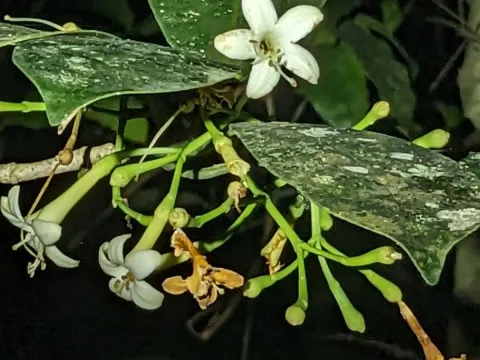
Fagraea
Fagraea
Fagraea is a genus of evergreen trees and shrubs belonging to the Gentianaceae family. These plants are native to tropical regions of Asia and the Pacific, often found growing as epiphytes or understory trees in humid forests.
What the section contains


Fagraea
The cultivation of Fagraea requires a tropical or subtropical climate with high ambient humidity and consistently warm temperatures throughout the year. They are highly sensitive to cold stress and must be protected from any frost or significant temperature drops.
Soil requirements for Fagraea include a well-draining, nutrient-rich, and slightly acidic medium. When grown in pots or greenhouses, a substrate based on peat or bark is often used to ensure proper aeration for the root system, mimicking its natural epiphytic habitat.
Regarding light, these plants thrive in filtered light or partial shade. Direct midday sunlight should be avoided to prevent leaf scorch, especially in younger plants, while insufficient light can result in stunted growth and lack of floral development.
Agronomic management involves maintaining high moisture levels in the root zone without creating waterlogged conditions. Regular fertilization with a balanced, slow-release NPK fertilizer during the active growing season is recommended for optimal foliage health.
Fagraea is susceptible to various fungal pathogens, particularly root rot, which is common if soil drainage is inadequate. Overwatering is the primary cause of such issues, necessitating a precise irrigation schedule.
Common pests affecting this culture include mealybugs, scale insects, and spider mites. These sap-sucking insects can cause significant damage to leaves and stems if populations are not managed early in the infestation stage.
Integrated Pest Management (IPM) strategies are highly effective for Fagraea. This includes the use of horticultural oils, insecticidal soaps, and introducing predatory insects to control populations of spider mites and scale.
Leaf spot diseases can occur if the humidity levels are too high combined with poor air circulation. Improving ventilation in the growing area is essential for preventing the spread of spores and maintaining overall plant vigor.
Routine inspections for early signs of distress, such as leaf discoloration or sticky residues, allow for quick intervention. Keeping the foliage clean and removing debris from the base of the plant further reduces the risk of infection.