
Pua kenikeni
Fagraea berteroana
Description
Growing requirements
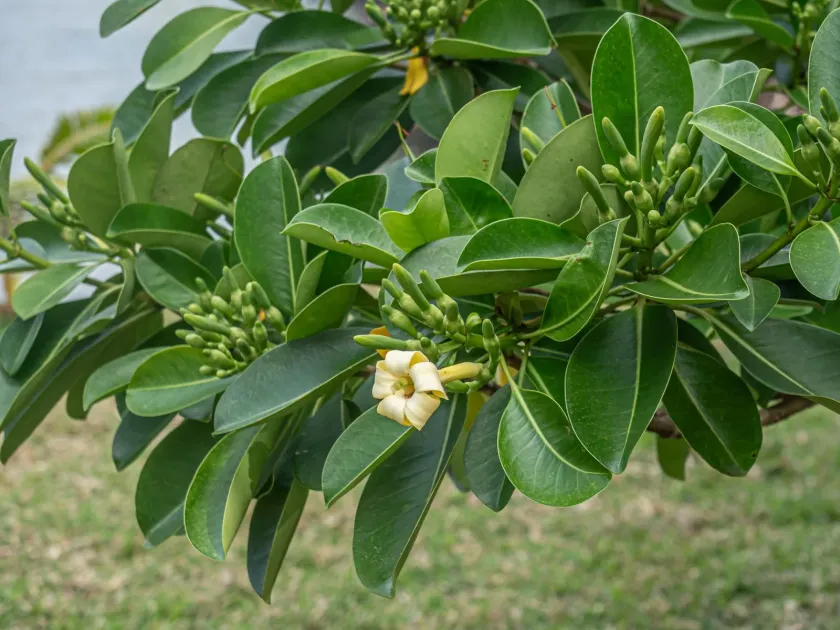
Fagraea berteroana, widely known as Pua kenikeni, is a prominent member of the Gentianaceae family. This species typically grows as a dense, evergreen tree or a large shrub, occasionally exhibiting epiphytic habits in dense tropical forest environments.
The plant is native to the tropical regions of the Pacific islands, including Polynesia, Melanesia, and parts of Australia. It thrives in high-rainfall zones where humidity remains elevated throughout the entire vegetative season.
For successful growth, Fagraea berteroana requires a warm, frost-free climate. Temperatures should ideally stay above 18°C, as the plant is highly susceptible to chilling injury and cold stress which can lead to rapid defoliation.
Regarding soil requirements, the plant demands excellent drainage to prevent root rot, which is a common issue in heavy or compacted soils. A porous, organic-rich growing medium, such as a mix designed for epiphytes or acidic shrubs, is generally recommended.
Consistent moisture is essential, but the plant should never be left sitting in saturated soil. Regular irrigation should be adjusted based on the light intensity and ambient temperature to maintain steady growth during the active season.
Main diseases and pests
While generally hardy in its native habitat, the plant can be susceptible to scale insects and mealybugs, especially when grown in protected or greenhouse environments with limited airflow.
Fungal leaf spots can occur if humidity is too high and air circulation is poor, particularly during prolonged overcast conditions. Proper spacing and ventilation are critical to mitigating these risks.
Root rot remains the most significant threat to the longevity of the plant, often resulting from over-watering or the use of heavy, non-aerated substrates that retain excess moisture.
Pests such as aphids may occasionally cluster on tender new foliage, causing distortion. Regular inspection and the application of mild horticultural oils are recommended to keep populations in check.
Maintaining a balanced nutritional regime is vital, as micronutrient deficiencies can make the tree more susceptible to secondary infections and reduce the overall quality and frequency of flower production.
Harvesting
The primary utility of Fagraea berteroana is its cultural and ornamental significance. Its flowers, which transition from creamy white to deep yellow, are highly valued for their exceptional, gardenia-like fragrance.
The flowers are frequently harvested for use in traditional leis, hair ornaments, and to scent coconut oils. In the perfume industry, the extract of its flowers is sought after for creating high-end tropical-themed fragrances.
Its timber is known for being extremely durable and resistant to environmental degradation. In its native range, the wood has historically been utilized for small-scale construction and the carving of tools and cultural artifacts.
Harvesting the flowers is a delicate process, typically done by hand. Since the blossoms are fragile and oxidize quickly, they are often processed immediately to preserve their volatile aromatic compounds.
Beyond its human use, the tree serves as an important ecological component by providing food in the form of berries for diverse native bird populations, thereby assisting in the dispersal of the species within the ecosystem.