
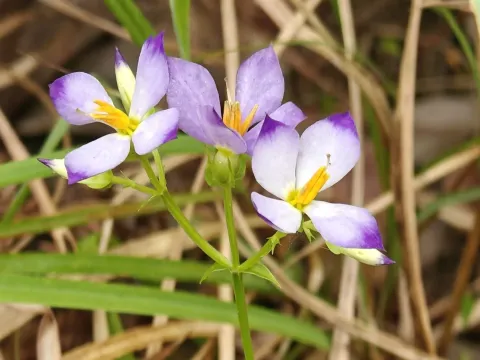
Exacum
Exacum L.
Exacum (Exacum L.) seeds should be sown in late winter or early spring, typically between February and March. Since the seeds are extremely fine, they should be scattered on the surface of the moist soil and pressed gently without covering them deeply.
What the section contains


Exacum
A consistent temperature between 20–22 degrees Celsius is necessary for successful germination. Covering the container with plastic wrap or glass creates a greenhouse effect that maintains the required moisture levels during the early stages.
Pricking out the seedlings occurs once they develop two or three true leaves. It is crucial to handle the seedlings with extreme care, as Exacum has a delicate root system that does not recover well from significant disturbance.
Young plants are moved into individual 10–12 cm pots. Frequent pinching of the growing tips is highly recommended to encourage lateral branching, which results in a denser, more compact habit and a higher density of flowers.
Belonging to the Gentianaceae family, Exacum is commonly treated as a short-lived annual or biennial in greenhouse production, valued primarily for its fragrant, star-shaped purple or blue blooms.
This crop thrives in bright, indirect sunlight. Direct exposure to harsh midday sun can scorch the foliage and significantly shorten the flowering period, so filtered light is essential for optimal growth.
A well-draining, nutrient-rich soil mix is required. A combination of peat moss, leaf mould, and coarse sand provides the necessary aeration and moisture-retentive properties needed for healthy development.
Regular but moderate watering is vital. The substrate should be kept consistently moist to the touch; however, waterlogging must be avoided, as stagnant water will quickly lead to root rot and plant decline.
The ideal temperature for Exacum ranges between 18–20 degrees Celsius. It is sensitive to rapid thermal fluctuations, cold drafts, and high-heat environments, which can trigger bud drop and physiological stress.
Maintaining high humidity is important for the overall health of the plant. If the indoor atmosphere is dry, place the pot on a tray filled with wet pebbles to increase local humidity around the plant.
Spider mites are the most significant pest for Exacum, especially in low-humidity conditions. Regular inspections of the undersides of the leaves are necessary to identify early infestations and apply appropriate treatments.
Overwatering, especially during cooler temperatures, often leads to grey mould (Botrytis). This fungal infection appears as fuzzy grey patches and can rapidly cause the decay of the foliage and stems.
Aphids may occasionally target the new growth and flower buds. These insects can be controlled using mild insecticidal soaps or systemic treatments if the infestation is severe enough to affect flower quality.
Root rot caused by various soil-borne fungi is a common threat in poorly drained containers. Prevention focuses on using sterile potting media and ensuring proper drainage at the bottom of the pot.
General hygiene, such as promptly removing dead or yellowing leaves and maintaining clean equipment, is essential to keep the crop healthy and free from common pathogens throughout the growing cycle.