
Graptosedum
Hybrids between Graptopetalum and Sedum
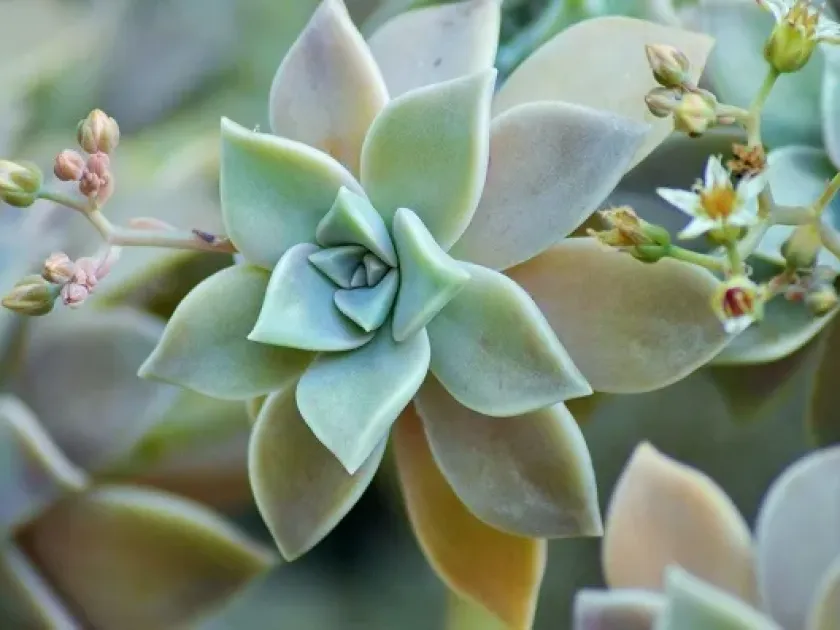
Description
Growing requirements
Graptosedum is an intergeneric hybrid resulting from the cross-breeding of plants from the Graptopetalum and Sedum genera, both belonging to the Crassulaceae family. This hybrid combines the elegant rosette structure of its parents with high adaptability to varied environmental conditions.
The cultivation of Graptosedum requires bright, indirect to direct sunlight. When grown in optimal light conditions, the plant maintains a compact habit and develops vibrant leaf colors; however, insufficient light causes the stems to etiolate and lose their aesthetic appeal.
Soil requirements focus primarily on drainage. A porous, well-draining substrate mix—typically consisting of commercial succulent soil amended with pumice, perlite, or coarse sand—is essential to prevent root asphyxiation and potential rot due to waterlogged media.
The irrigation schedule should follow the "soak and dry" method, where the soil is allowed to dry out completely before the next watering cycle. During the dormant winter season, water should be strictly limited to prevent the succulent from succumbing to fungal pathogens in cool environments.
Graptosedum is widely utilized in horticulture for xeriscaping, container gardening, and indoor displays. Its ease of propagation via leaf cuttings makes it a popular choice for both amateur collectors and professional landscape designers focusing on succulent arrangements.
Main diseases and pests
The most common threat to Graptosedum is root rot, which is almost exclusively caused by overwatering or poorly draining soil. If the roots remain saturated for prolonged periods, they will succumb to fungal attacks, leading to the rapid decay of the entire plant.
Mealybugs are the most frequent insect pests, often found in the tightly packed leaf axils or at the base of the plant. Their presence is marked by white, cotton-like masses, necessitating the use of systemic insecticides or targeted applications of rubbing alcohol.
Spider mites may infest the plant during periods of low humidity. These microscopic pests feed on the cell sap, leaving stippling or small discolored spots on the leaves. Increasing airflow and maintaining appropriate humidity levels are key preventive measures.
Fungal leaf spot diseases can occur if the plant is kept in an environment with poor air circulation and high humidity. Infected leaves must be removed immediately to stop the spread, and the remaining healthy foliage should be treated with appropriate fungicides.
To ensure long-term health, growers should prioritize sanitary practices, such as using sterile tools and ensuring the growing medium is free of previous pathogens. Regular inspection is the most effective strategy to catch and address potential threats before they become critical.