
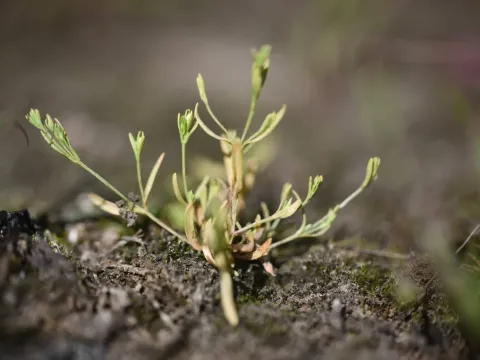
Exacum
Exaculum
Sowing of Exacum seeds is carried out in late winter or early spring, approximately in February or March. For successful germination, the seeds require high humidity and a stable air temperature between 20–22 degrees Celsius.
What the section contains

Exacum
Since the seeds of this plant are very small, they are not deeply buried in the soil, but rather lightly pressed into the substrate. To create a greenhouse effect, seed containers are covered with clear plastic or glass, airing them daily until sprouts appear.
Pricking out is performed after the young plants have formed two pairs of true leaves. It is important to be careful during transplanting, as the root system of Exacum is extremely sensitive to mechanical damage.
The optimal time for planting seedlings into pots is when the threat of night frosts has passed, if the plant is intended to be kept outdoors. The culture prefers gradual adaptation to new environmental conditions.
To accelerate growth and form a lush crown, it is recommended to pinch the tops of the shoots, which stimulates the development of lateral branches and increases the overall ornamental value of the bush.
Exacum is a member of the Gentianaceae family and requires specific conditions for optimal development. The plant prefers bright but diffused light, as direct sunlight can cause leaf burns.
The soil for this crop should be loose, fertile, and have a slightly acidic reaction. An important condition is excellent drainage, as water stagnation in the pot is fatal to the root system.
During the active growing season, the plant needs regular watering with soft, settled water at room temperature. Both drying out of the root ball and excessive waterlogging must be avoided.
The optimal air humidity for Exacum should be maintained at a high level. In city apartment or greenhouse conditions, regular misting or the use of special air humidifiers is recommended.
The culture is sensitive to sharp temperature drops and drafts. In winter, Exacum requires a dormant period with a moderate temperature decrease to 15–16 degrees.
The main threat to the health of Exacum is fungal diseases that develop against the background of high humidity and insufficient ventilation. Root and stem rot are the most commonly observed issues.
Among pests, the spider mite causes the most damage, reproducing rapidly in dry air. It can be detected by thin webbing on the underside of leaves and yellowing of the leaf blades.
Aphids can also attack young shoots and buds, sucking out cell sap and deforming vegetative organs. If insects are detected, systemic insecticides or phyto-preparations must be applied.
To prevent the spread of diseases, it is important to follow the watering regime and avoid overcrowding the plantings. Regular inspection of plants helps to identify problems at an early stage and take necessary measures.
- Regular ventilation of greenhouses or rooms.
- Monitoring the cleanliness of gardening tools.
- Using high-quality disinfected soil.