
Fagraea auriculata
Fagraea auriculata
Description
Growing requirements
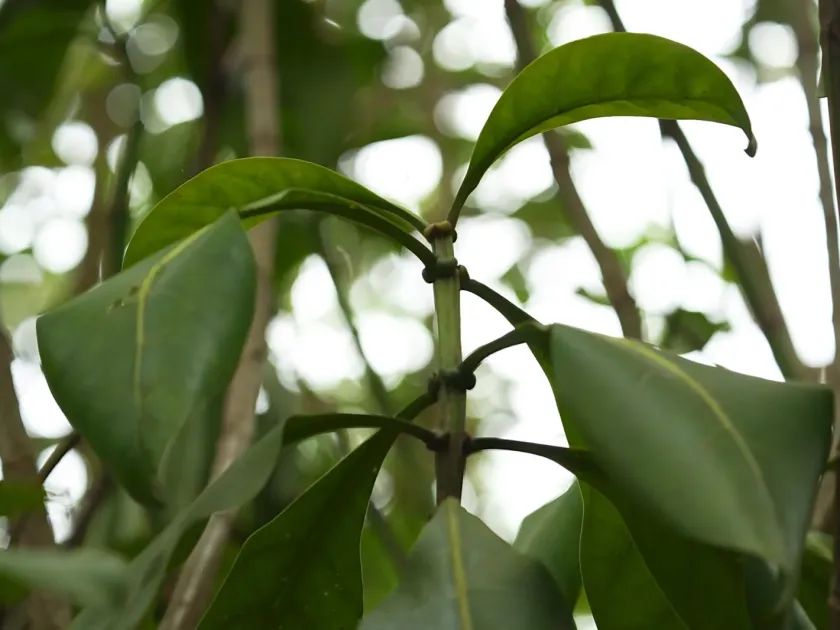
Fagraea auriculata is a member of the Gentianaceae family. It is a robust evergreen shrub or small tree, notable for its large, leathery leaves with distinctive auriculate bases.
Native to Southeast Asia, this plant thrives in humid tropical rainforest environments where it often begins its life cycle as an epiphyte on larger host trees.
The crop requires a strictly tropical climate with consistent warmth. It is highly intolerant to cold temperatures and must be protected from any frost or significant chill.
Soil requirements include a rich, well-draining organic medium. The plant performs best in slightly acidic soils that mimic the nutrient-dense forest floor litter.
Adequate humidity is essential for the healthy growth of this species. In cultivation, constant air moisture levels are as important as consistent soil moisture.
Harvesting
The primary use of Fagraea auriculata is in ornamental horticulture. Its large, funnel-shaped, fragrant flowers make it a prized specimen for botanical gardens and park landscaping.
The plant serves as a significant biological resource in its native habitats, providing nectar for various local pollinators and insects.
In certain regions, historical use of the plant in traditional medicine suggests the presence of bioactive compounds, which remains a subject of botanical study.
Cultivation practices involve carefully controlled light conditions, ensuring the plant receives bright, indirect sunlight to prevent foliage damage.
Propagation is typically achieved through seeds or stem cuttings in specialized nursery environments to ensure proper root development and climate acclimation.