
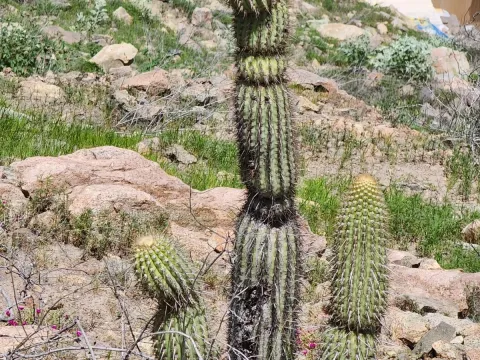
Weberbauerocereus
Weberbauerocereus
Seeds of Weberbauerocereus should be sown in the spring when temperatures remain consistently between 22 and 25 degrees Celsius. Use a sterile, well-draining substrate mix high in pumice or grit.
What the section contains


Weberbauerocereus
The seeds are placed on the surface and only lightly covered with soil, as they require light to germinate effectively. Cover the containers with glass or plastic to maintain humidity levels.
Once seedlings emerge, ventilation must be gradually increased to prevent damping-off disease. Removing the cover slowly helps harden off the young cacti.
Pricking out the seedlings should be deferred until they are strong enough to handle, usually several months after germination. Careful root handling is vital during this process.
Cuttings can be propagated during the active growth phase. Always let the cut surface callus over for several days before placing it into the rooting medium.
Weberbauerocereus is a genus within the Cactaceae family, native to the arid inter-Andean valleys of Peru and Ecuador. These plants are true xerophytes, perfectly evolved for mountain desert survival.
Full sun exposure is a non-negotiable requirement for these plants. Inadequate light will lead to etiolation, where the stem becomes stretched, thin, and significantly weaker.
The potting medium must be highly porous and inorganic. A mixture of sand, gravel, and organic loam is generally recommended, ensuring that the plant never sits in saturated soil.
Watering should be deep but infrequent during the growing season, allowing the soil to dry out completely between sessions. During the winter dormancy period, the plant requires cold and dry conditions.
These cacti thrive when exposed to significant diurnal temperature variations, which mimic their native high-altitude environment in the Andes mountains.
Root rot is the most serious threat, typically caused by water accumulation at the base of the plant. Ensuring excellent drainage is the primary defense against this pathogen.
Mealybugs are common pests that lodge themselves in the deep ribs of the cactus. Regular inspections and systemic insecticidal treatments are recommended to keep the population in check.
Spider mites can become a problem in very low humidity, often appearing as fine webbing and causing discoloration of the plant skin. They must be managed with appropriate miticides.
Inappropriate winter care, such as keeping the plant too warm or moist, can invite opportunistic fungi. Keeping the plants in a cool, ventilated area is crucial for successful dormancy.
- Root rot (Phytophthora)
- Mealybugs
- Spider mites
- Fungal stem infections