
Yellow dragon fruit
Selenicereus megalanthus
Description
Sowing dates
Selenicereus megalanthus, commonly known as yellow dragon fruit, is a member of the Cactaceae family. In commercial cultivation, it is primarily propagated through vegetative cuttings to ensure consistency in fruit quality and yield.
Cuttings should be taken from healthy, mature stems and allowed to callous for several days before being planted in a well-draining, sandy substrate. This prevents the entry of pathogens into the cut site.
Seed propagation is also possible but is mostly utilized for breeding purposes. Seeds require a warm environment and high humidity to germinate effectively within the first two weeks of sowing.
Seedlings or rooted cuttings are typically transplanted into permanent greenhouse structures, where they are trained to grow vertically on trellises to optimize space and light exposure.
Proper spacing is crucial for airflow, which reduces the humidity around the stems and helps in the prevention of various bacterial and fungal issues during the early growth phase.
Growing requirements
This species thrives in tropical and subtropical climates, requiring temperatures between 20°C and 30°C. It is extremely sensitive to frost, which can cause severe damage or death to the plant tissue.
The plant requires full sun to partial shade. In intense sunlight regions, shading nets are essential to prevent stem bleaching and protect the fruit from sunscald during the development stage.
The ideal soil is porous, rich in organic matter, and slightly acidic to neutral. High-quality drainage is the most critical factor, as standing water is the primary cause of root rot in this species.
Watering schedules should be adjusted based on the plant's growth cycle. During the flowering and fruiting period, consistent soil moisture is needed, while the dry season allows for a reduced watering regime.
Fertilization should focus on potassium and phosphorus to enhance flower production and fruit sugar content. Avoid excessive nitrogen, which promotes rapid but weak stem growth prone to disease.
Yield
Yellow dragon fruit is highly prized for its sweetness and complex flavor profile compared to its red-skinned counterparts. Yields vary significantly based on pollination efficiency and management.
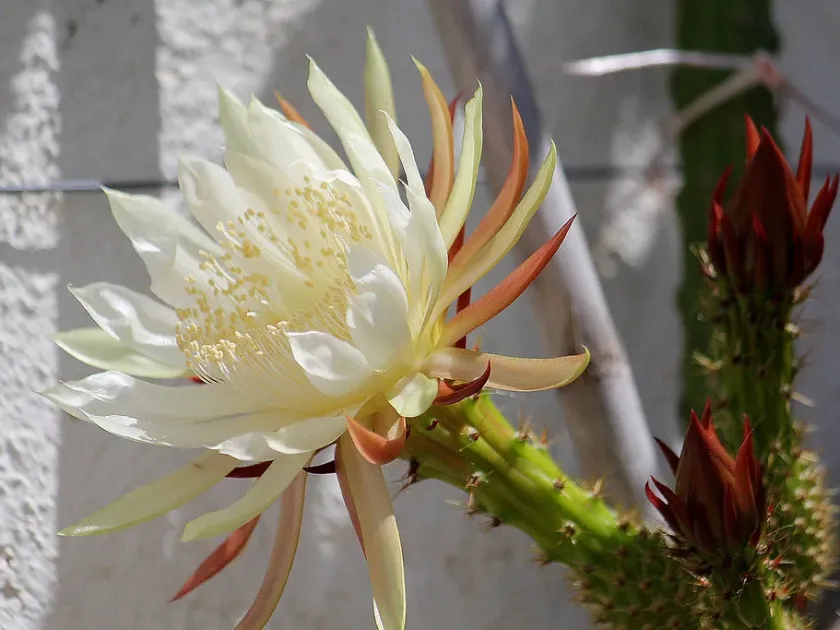
Because the flowers bloom at night, many commercial farms practice manual cross-pollination to ensure maximum fruit set and size. This technique significantly increases the number of marketable fruits per plant.
Fruiting typically begins within 2–3 years of planting. A mature, well-maintained plant can produce several flushes of fruit per season, provided the environmental conditions remain favorable.
Yield management involves pruning non-productive stems and thinning excess flower buds to concentrate the plant's energy into developing larger, higher-quality fruits.
Consistent harvest records help farmers identify the most productive individual plants, which can then be used as sources for future vegetative propagation.
Main diseases and pests
The most common disease threats include soft rot, stem rot, and anthracnose, all of which are exacerbated by high humidity and improper drainage. Fungicides should be used as a last resort.
Pests like mealybugs and aphids are frequent challenges. They often hide in the crevices of the succulent stems, necessitating regular inspections and the use of insecticidal soaps or biological controls.
Root-knot nematodes can weaken the plant, reducing its ability to absorb nutrients. Integrating organic soil amendments can help improve soil health and suppress nematode populations.
Physiological issues such as stem yellowing often indicate nutrient imbalances or water stress. Early identification is key to adjusting the crop management plan before yield is impacted.
Maintaining a clean greenhouse environment by removing fallen debris and weeds is a standard practice to minimize the risk of spreading pathogens among the crop rows.
Harvesting
The harvest period is determined by the fruit color changing to a vibrant, solid yellow. At this stage, the fruit reaches its peak sugar content and ideal aromatic profile.
Harvesting is performed by clipping the stem close to the fruit. Because the skin can feature tiny, easily detached spines, workers should wear gloves to protect their skin during the process.
Post-harvest handling is critical, as yellow dragon fruit has a relatively thin skin that is prone to bruising. Fruits should be stored in cool, ventilated areas to maintain firmness.
Proper sorting by size and weight allows for tiered pricing and better logistics. The fruit should be packaged in crates with soft lining to prevent pressure damage during shipping.
Market life is extended by careful temperature control, ideally keeping the fruit at around 10°C to 12°C during transit to the final point of sale.