
Weberbauerocereus weberbaueri
Weberbauerocereus weberbaueri
Description
Growing requirements
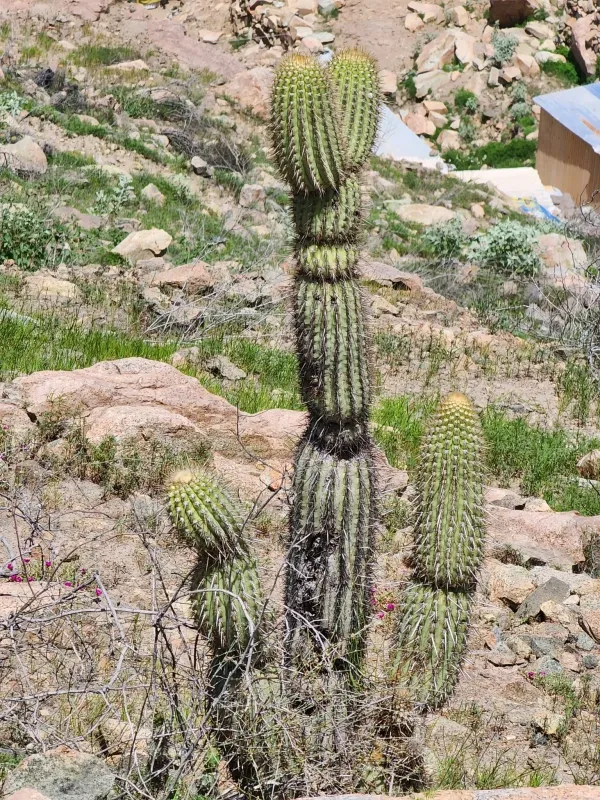
Weberbauerocereus weberbaueri is a remarkable columnar cactus belonging to the Cactaceae family. Native to the arid and rugged landscapes of Peru, this species is well-adapted to high-altitude environments characterized by intense solar radiation and sparse precipitation.
Botanically, the plant features a robust, tree-like stem structure covered in dense, protective spines. These spines serve a vital role in shading the stem from the harsh mountain sun and minimizing water loss through evapotranspiration.
For successful cultivation, full sun exposure is non-negotiable. This plant requires maximum light intensity throughout the year to maintain its structural integrity and prevent weak, elongated growth patterns.
The substrate must be extremely well-draining, mimicking the rocky, mineral-rich soils of its native habitat. A mixture of grit, coarse sand, and a small amount of low-organic loam is considered the standard for this crop.
Watering must follow a strict seasonal cycle. During the active growing season, deep but infrequent watering is appropriate, while the winter dormant period requires near-total dryness to simulate the Andean dry season.
Main diseases and pests
The most critical threat to Weberbauerocereus weberbaueri is root rot, which is almost exclusively caused by overwatering or poor drainage. Once decay reaches the vascular system of the stem, the plant is difficult to save.
Mealybugs are the primary pest concern. They thrive in the dense, protective spine clusters, making them difficult to reach. Regular monitoring and the application of contact or systemic insecticides are required to keep infestations in check.
Spider mites can become a nuisance, particularly if the plant is kept in conditions with poor airflow and excessively dry, hot air. They feed on the surface of the stem, leaving unsightly scars and lesions.
Scale insects are another potential threat, appearing as small, dark, hardened bumps on the ribs. Manual removal using an alcohol-soaked swab is the recommended immediate treatment for small colonies.
Fungal spotting, often triggered by humid and stagnant conditions, can compromise the epidermis. Maintaining good air circulation is the best preventative measure against such diseases.