
Rhodocactus stenanthus
Rhodocactus stenanthus
Description
Growing requirements
Rhodocactus stenanthus, frequently classified in contemporary taxonomy as Pereskia stenantha, belongs to the Cactaceae family. This species is highly valued by botanists for representing a primitive form of cactus, characterized by distinct leaves and a woody growth habit, distinguishing it from most succulent cactus species.
The plant originates from the tropical regions of South America, specifically within the dry forest habitats of Brazil. Its native range consists of environments that experience alternating wet and dry seasons, to which the plant has adapted its physiological processes for water retention and transpiration control.
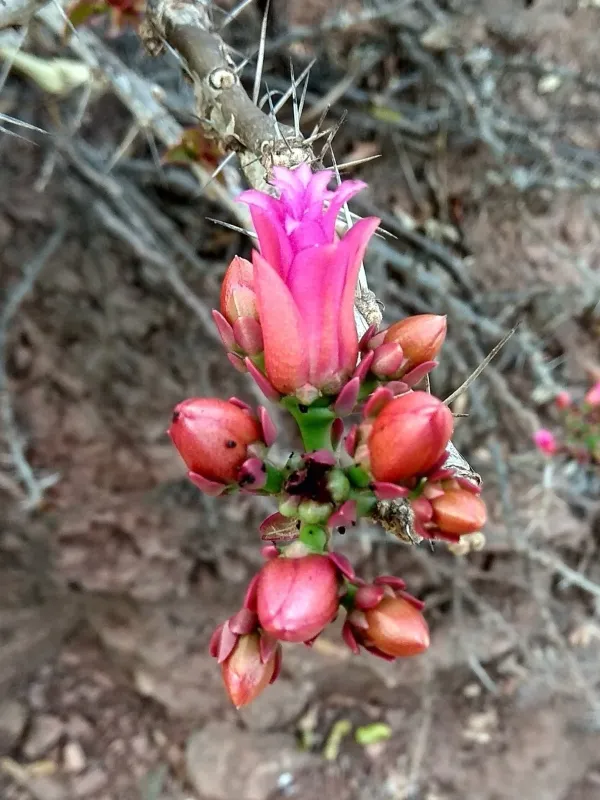
Botanically, it presents as a shrub or tree-like plant with thorny branches and broad, elliptical, fleshy leaves. The spines originate from areoles, consistent with the Cactaceae family, providing a defense mechanism while the leaves continue to perform active photosynthesis, which is a rare trait in the cactus world.
Cultivation requirements involve providing intense, indirect light to ensure robust growth. The choice of soil is crucial; a well-draining, nutrient-rich potting medium is necessary to prevent waterlogging, which the root system is highly sensitive to due to the plant's succulent nature.
Agrotechnical management requires a precise watering strategy. During the active growing season, irrigation should be regular but allowed to dry out between sessions. During the winter dormancy period, the plant requires cooler temperatures and a significant reduction in water input to ensure long-term health.
Main diseases and pests
The main threats to the plant include infestations of mealybugs and spider mites, which thrive in low-humidity environments. Furthermore, over-watering or the use of poorly drained soil often leads to fungal infections such as root rot, which can cause rapid tissue collapse in the succulent stems.