
Rose cactus
Rhodocactus grandifolius
Description
Growing requirements
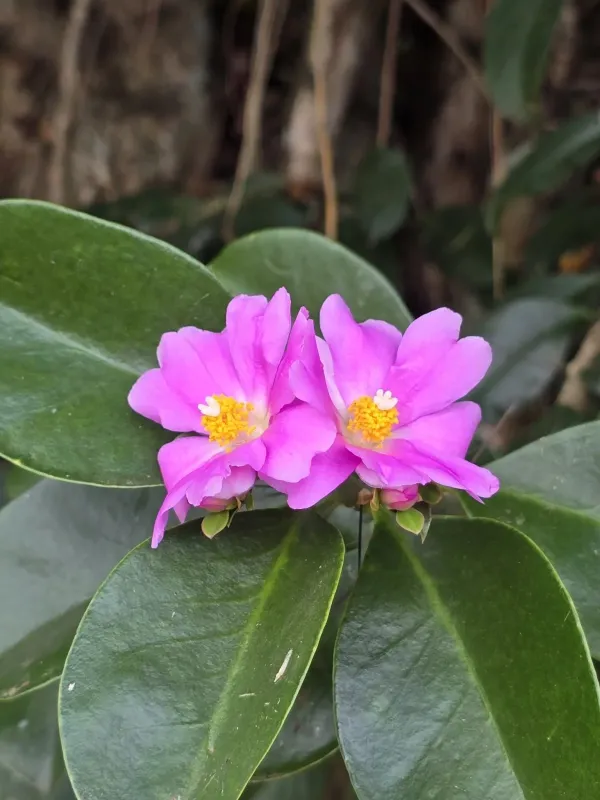
The Rose cactus (Rhodocactus grandifolius, often referred to as Pereskia grandifolia) is a distinct member of the Cactaceae family. Unlike most cacti, it retains large, fleshy leaves that are essential for its metabolic processes. This genus bridges the evolutionary gap between leafed trees and succulent cacti, making it a subject of great interest in botany and specialized agriculture.
Native to the tropical regions of Brazil, this plant thrives in humid forest conditions. In agricultural practice, it is strictly categorized as a tropical perennial. It requires a climate that maintains temperatures above 15 degrees Celsius year-round, as exposure to cold air leads to rapid tissue damage and leaf drop.
Soil requirements for this species are specific: a nutrient-rich, well-draining potting mix is mandatory. The roots are sensitive to waterlogging, necessitating a container with multiple drainage holes and a substrate base consisting of peat, sand, and perlite to ensure optimal gas exchange at the root zone.
Regarding light, the Rose cactus prefers bright, indirect sunlight. While it can handle some dappled shade, exposure to low light causes the plant to become leggy and lose its characteristic leaf density. Proper orientation toward light sources is critical for maintaining a compact and healthy growth habit throughout the year.
Effective management includes scheduled fertilization during the active growing season. Balanced NPK fertilizers, diluted to half-strength, help support the plant's rapid biomass production. Careful pruning is also recommended to maintain structural integrity and encourage the development of new, healthy foliage.
Main diseases and pests
Common pests encountered during cultivation include spider mites and mealybugs, particularly when the ambient humidity drops too low. These pests can be effectively managed with insecticidal soaps or neem oil, provided that the application is consistent and covers the entire leaf surface area.
Fungal pathogens such as root rot represent the most significant threat to plant health. This usually occurs due to poor soil aeration or excess moisture during the dormant season. Improving drainage and ensuring adequate airflow between plants is the primary strategy for disease prevention in a nursery setting.