
Pereskia horrida
Pereskia horrida
Description
Growing requirements
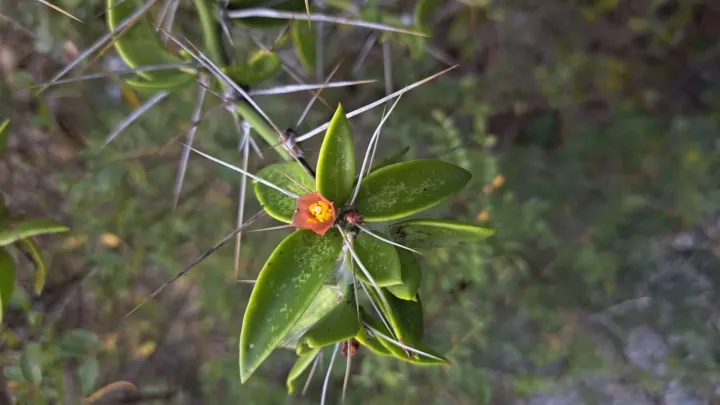
Pereskia horrida is a unique member of the Cactaceae family, known for retaining functional leaves, unlike most other cactus species. This woody shrub exhibits distinct adaptive features that allow it to thrive in the harsh environmental conditions of its native South American habitats.
The botanical structure includes a succulent, woody stem armed with thorns, supporting broad leaves that enable efficient photosynthesis. This makes the plant a fascinating subject for both botanical research and specialized ornamental gardening in warm climates.
Soil requirements for Pereskia horrida focus on high porosity and drainage capacity. A mix comprising coarse sand, perlite, and well-decomposed organic matter provides the ideal environment for the root system, preventing the common issue of root rot in cacti.
The plant thrives under full sun exposure, which is necessary to maintain the health and vigor of its foliage. In cultivation, it requires a warm environment where temperatures remain stable, as it lacks cold hardiness and must be protected from frost at all times.
Agronomic management involves periodic pruning to control its shape and promote dense growth. Fertilization should be focused on the active growing season, utilizing balanced, low-nitrogen formulas to encourage sturdy development of the thorns and woody structures.
Main diseases and pests
Common pests affecting this species include mealybugs and spider mites, which can easily establish themselves in the dense foliage. Early detection and the application of appropriate horticultural oils or systemic insecticides are vital for maintaining plant health.
Pathogenic threats are primarily related to fungal infections triggered by excessive moisture or insufficient soil aeration. Maintaining a strict watering regimen that allows the soil to dry out between applications is the best cultural practice to prevent these dangerous conditions.