

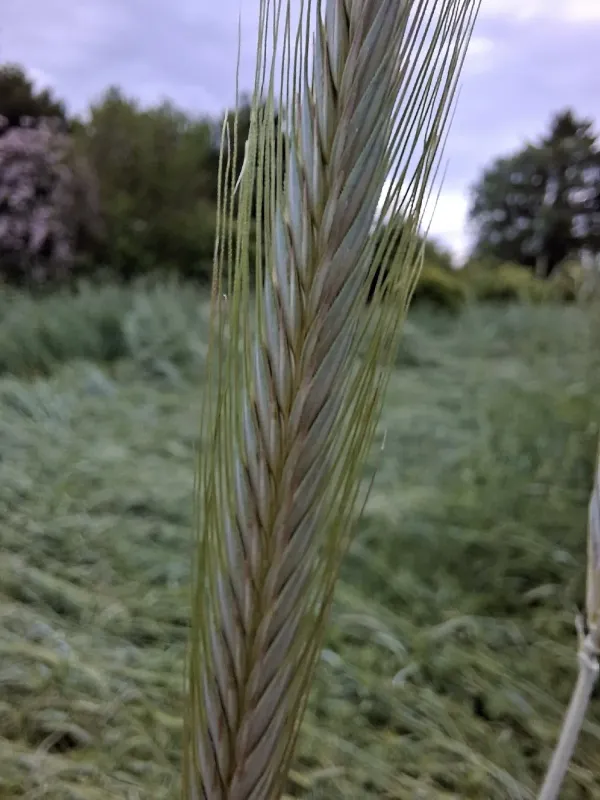
Description
Sowing dates
Winter rye is known for its extreme cold hardiness and its ability to germinate in temperatures as low as 1–2 °C. The ideal planting window usually falls 45 to 50 days before the onset of the first hard frosts.
Early sowing may cause the crop to become over-established in autumn, which reduces its cold tolerance and makes it more susceptible to infections. Late sowing prevents the formation of a robust root system and proper tillering, which is essential for survival.
Seeding rates typically range from 3 to 5 million viable seeds per hectare, depending on regional soil fertility. The optimal planting depth is 3–5 cm, adjusted based on the soil moisture content at the time of sowing.
Rye serves as an excellent crop in rotations due to its ability to suppress weeds and reduce soil pathogen loads. Maintaining spatial isolation from other cereal crops is vital to ensure seed purity and health.
In arid regions, it is crucial to manage soil moisture through appropriate tillage techniques or irrigation to ensure rapid and uniform emergence, which is the foundation of a successful harvest.
Growing requirements
Rye belongs to the Poaceae family and is widely regarded as one of the least demanding cereal crops. It thrives on sandy, poor, and even acidic soils where wheat would fail to produce a viable yield.
The crop exhibits significant drought tolerance thanks to a deep, extensive root system that efficiently extracts moisture and nutrients from the soil profile. Rye also features a highly efficient transpiration rate.
Optimal growth occurs on loamy-podzolic, gray forest soils, and chernozems with a pH level between 5.5 and 7.0. Rye is highly sensitive to waterlogged conditions and should not be planted in poorly drained areas.
Sufficient sunlight and moderate temperatures are required throughout the growing season for vigorous development. Its cold tolerance makes it a staple crop in regions with high agricultural risk and harsh winters.
Agronomic management includes the application of mineral fertilizers, particularly nitrogen in early spring, which stimulates vigorous tillering and accelerated vegetative growth during the early stages of development.
Yield
Rye yields depend heavily on the chosen variety and local agronomic practices, typically ranging from 30 to 60 decitons per hectare. Modern high-yield hybrids can significantly exceed these averages under optimal conditions.
The key to high productivity is the use of high-quality seed and timely application of fertilizers during the stem-elongation phase, which ensures proper ear formation and grain filling.
Crop productivity is largely determined by the density of productive stems per unit area. Proper stand establishment allows for optimized nutrient uptake per shoot, leading to better grain weight and quality.
Weather conditions during the grain-filling stage are critical for the thousand-kernel weight. Excess rainfall during this time may lead to lodging or sprouting within the ear, negatively affecting overall yield.
Applying balanced fertilizers, including essential micronutrients, allows the crop to express its full genetic potential, significantly increasing the number of grains per spike and overall field productivity.
Main diseases and pests
Rye is susceptible to various fungal diseases that can severely impact yield quality. Some of the most notable diseases include:
- Alternaria leaf blight
- Anthracnose
- Helminthosporium blight
- Rhizoctonia
- Sclerotinia
- Pythium root rot
- Penicillium rot
- Fusarium root rot
Several pests can cause significant damage to rye crops throughout their development. Key threats include:
- Meadow moth
- Sunn pest
- Leaf miner moth
- Leaf miner flies
- Scale insects
Disease prevention starts with using healthy, fungicide-treated seeds and following a proper crop rotation schedule. These measures are essential to minimize the buildup of soil-borne pathogens.
Pest management is based on regular field monitoring and the use of insecticides when thresholds are exceeded. An integrated pest management approach significantly improves the efficacy of control efforts.
Systematic phytosanitary controls help detect infestation hotspots at early stages, allowing for localized treatments that prevent widespread damage across the entire field.
Harvesting
Rye harvesting is performed at the full maturity stage when grain moisture content is between 14% and 16%. Timely harvesting is essential to prevent grain shattering and losses due to adverse weather conditions.
Direct combining is the most common method for harvesting rye, as it ensures efficiency and minimizes handling losses. Swathing may be used in specific cases where weed infestation is high.
Post-harvest management requires immediate cleaning and drying of the grain to reach safe moisture levels. This is a critical step to prevent spoilage and ensure stable storage throughout the year.
Combines must be properly calibrated based on variety specifications to minimize mechanical damage to the grain during threshing. Controlling drum speed and cylinder gaps is vital for quality results.
Efficient harvesting within the optimal window preserves the nutritional and processing quality of the grain, which is essential for the production of high-quality rye flour and food products.
In brief
40
Crop diseases
5
Crop pests
Content graph
Crop diseases · 40
Alternaria leaf spotAnthracnoseBacterial halo blightBarley yellow dwarfBlue moldCephalosporium stripeCercospora leaf spotCladosporiosisCommon buntCommon scabDilophospora leaf spotDwarf buntErgotEyespot diseaseFusarium root rotFusarium wiltHalo spot of barleyHelminthosporium leaf spotKarnal buntLeaf streakLingonberry rustLoose smutParaphaeosphaeria leaf spotPink root rotPlant RustPowdery mildewRhizoctonia root rotRhynchosporium secalisRoot-knot nematodeRye stem smutSclerotinia rotSeptoriaSeptoria leaf blotchSeptoria leaf blotchSoilborne mosaicStem rustTake-all root rotWheat gall nematodeYellow leaf spotYellow rust
Content graph
Crop pests · 5
Content graph
Connections · Rye
Most often together:
Marketplace
Products · 46
All 46
Fungicides 180
Herbicides, Desiccants 95
Plant Growth Regulators 46
Fertilizers 38
Insecticides, Acaricides 36
Rye 8
Rodenticides 3
Biological Products 3
Adjuvants 1


Alga
BEIJING LAILI MARIN BIOINDUSTRIAL CO., CHINA
Plant Growth Regulators
0
0
·
69
5 offers
13.25 €per 1 l
Buy

CHLORMEQVAT-CHLORIDE 750, V.R.
БАСФ СЕ, Німеччина
Plant Growth Regulators
0
0
·
65
4 offers
5.52 €per 1 l
Buy


Starpro 430 SC
Rotam Agrochemical Company Limited
Plant Growth Regulators
0
0
·
62
1 offer
4.15 €per 1 l
Buy




Ikarus Turbo
Rotam Agrochemical Company Limited
Plant Growth Regulators
0
0
·
55
5 offers
11.48 €per 1 l
Buy

Cycogan RK
F. Makteshim-Agan Agro Poland S.A., Poland, ch
Plant Growth Regulators
0
0
·
55
1 offer
3.82 €per 1 l
Buy


Mekva Pro 750 RK
Фадер Альянс Лтд., Великобританія (Fader Alliance Ltd., England) на заводах Нідерландів, Польщі
Plant Growth Regulators
0
0
·
54
4 offers
3.34 €per 1 l
Buy

ALPHA ETAPHON
Ф.Меатон Лімітед, Лондон, Великобританія.
Plant Growth Regulators
0
0
·
53
3 offers
1.53 €per 1 l
Buy

Alga
BEIJING LAILI MARIN BIOINDUSTRIAL CO., CHINA
Plant Growth Regulators
0
0
·
53
2 offers
13.25 €per 1 l
Buy


Alfa-Etafon
«Юнісіті Ентерпрайсіс Л.П.», Единбург, Великобританія
Plant Growth Regulators
0
0
·
52
1 offer
6.91 €per 1 l
Buy


Shetefon, RK
ДДЕ Фарм АГ, Тризен, Ліхтенштейн
Plant Growth Regulators
0
0
·
52
1 offer
108.51 €per 1 l
Buy

Chlormequat Chloride, RK
ДДЕ Фарм АГ, Тризен, Ліхтенштейн
Plant Growth Regulators
0
0
·
50
2 offers
4.76 €per 1 l
Buy

ALPHA ETAFON
Ф.Меатон Лімітед, Лондон, Великобританія.
Plant Growth Regulators
0
0
·
50
2 offers
1.53 €per 1 l
Buy


RETACEL EXTRA R 68
АТ Лучебниє заводи Драсловка, Чехія
Plant Growth Regulators
0
0
·
98
No offers
—
Details


Retaceil 720 RK
АТ Лучебниє заводи Драсловка, Чехія
Plant Growth Regulators
0
0
·
67
No offers
—
Details


Retacel Extra R 68
АТ Лучебниє заводи Драсловка, Чехія
Plant Growth Regulators
0
0
·
64
No offers
—
Details


RETAZEL 720
Lučebni závody Draslovka a.s. Kolin, AT
Plant Growth Regulators
0
0
·
54
No offers
—
Details


BINOM
«Нанджин Ессенс Файн-Кемікал Ко. Лтд» (Китай)
Plant Growth Regulators
0
0
·
50
No offers
—
Details

Synchrony SL
Няньджін Буст Індастріал енд Трейдінг Корп., Китай
Plant Growth Regulators
0
0
·
50
No offers
—
Details


LIQUID PEAT HUMATES «AGROASSISTENT» (MARK A, MARK B)
PLANT RESEARCH CENTER, LLC
Plant Growth Regulators
0
0
·
35
No offers
—
Details