
Description
Symptoms
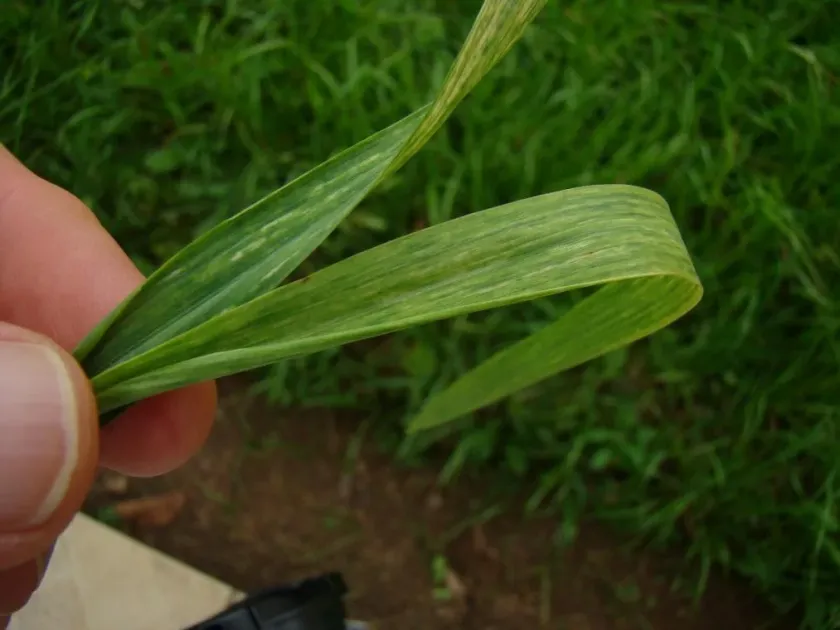
Symptoms of soilborne mosaic typically appear in early spring, shortly after the crop resumes growth. The foliage develops distinctive pale green or yellowish streaks and mosaics, which are the primary diagnostic indicators.
Affected plants exhibit significant stunting and reduced tillering. This results in patchy stands across the field, as the disease does not spread evenly but rather in localized areas depending on vector activity.
During the stem elongation phase, while symptoms might seem to fade due to warmer temperatures, the overall vigor of the plant remains compromised. In severe cases, lower leaves may prematurely yellow and die off.
The severity of symptom expression is highly dependent on the susceptibility of the cereal variety and the soil environmental conditions at the time of initial infection during the autumn.
Proper identification often requires distinguishing mosaic patterns from nutritional deficiencies. Laboratory diagnostics, including ELISA or PCR tests, are essential for confirming the presence of the virus.
Pathogen
The causal agent is the Soilborne wheat mosaic virus (SBWMV), which is classified under the Furovirus genus. It is a rod-shaped virus that contains two segments of single-stranded RNA.
The virus is obligately transmitted by the soil-borne plasmodiophorid fungus, Polymyxa graminis. This fungus acts as a biological vector, carrying the virus within its resting spores.
These resting spores, known as cystosori, can survive in the soil for many years, acting as a long-term reservoir for the virus even when host plants are not present in the field.
Infection occurs in the root zone when the fungus zoospores penetrate the root hairs of the host plant, effectively introducing the viral particles into the plant cells.
The virus then moves systemically throughout the plant, interfering with vital physiological processes and causing the characteristic mosaic symptoms observed on the leaves.
Conditions for development
The development of soilborne mosaic is heavily favored by cool, wet conditions during the autumn, which are optimal for the motility and infection activity of the Polymyxa graminis vector.
Fields with high soil moisture, particularly those with poor drainage or heavy clay content, are significantly more susceptible to outbreaks of the disease.
Continuous cropping of winter cereals, such as wheat or rye, creates an environment where the population of the fungal vector can increase steadily over time, leading to severe infestation.
Cooler spring temperatures often exacerbate the visible symptoms on the crop, as the plants remain under prolonged physiological stress, further hindering their growth.
Mechanical movement of soil contaminated with fungal resting spores by farming equipment, runoff water, or wind erosion is the primary method of long-distance dissemination.
Why it matters
Soilborne mosaic causes significant yield losses in winter cereals, including wheat and rye. The primary impact is a decrease in grain weight and a reduction in the number of productive tillers.
Yield losses can vary widely, but in high-pressure areas with susceptible varieties, reductions can range from 20% to 50%, significantly impacting the profitability of the crop.
The infection disrupts the plant's photosynthetic efficiency, which translates into lower test weights and reduced grain quality, often affecting the end-use value of the harvested produce.
Plants affected by the mosaic virus show reduced resilience to secondary stressors, such as winter freeze damage, drought, or soil-borne pathogens, leading to further stand thinning.
Long-term economic damage is compounded by the need for specific management interventions and the limitations it imposes on the selection of cereal varieties for future seasons.
Protection
The most effective management strategy for soilborne mosaic is the deployment of resistant or tolerant crop varieties. Breeding programs prioritize this trait to maintain productivity in infested fields.
Crop rotation with non-host crops, such as soybeans or corn, can help reduce the population of Polymyxa graminis in the soil over several years, although it does not eliminate it entirely.
Delaying the planting date of winter cereals can sometimes reduce the window of opportunity for the fungal vector to infect the young seedlings, as soil temperatures may drop below the infection threshold.
Improving soil drainage through tiling or proper land management practices can help create conditions less favorable for the survival and spread of the fungal vector.
Sanitation practices, such as cleaning equipment before moving from infested to non-infested fields, are crucial for limiting the spread of the virus across agricultural landscapes.
Pathogens and affected parts
Affects crops · 1
Discussion
No discussions yet — be the first.