
Description
Symptoms
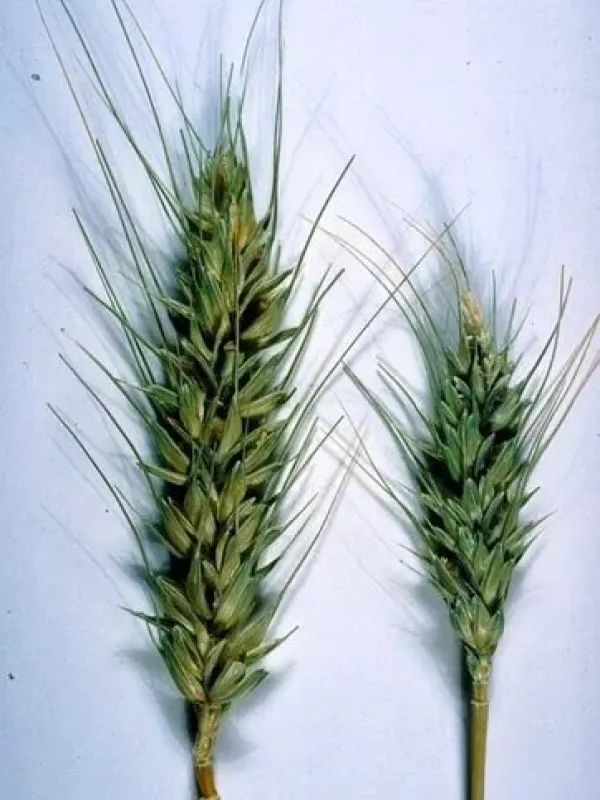
Visual identification of Karnal bunt is difficult until the crop reaches maturity. The hallmark sign is the transformation of kernels into black, powdery masses of spores, usually emerging from the pericarp.
Infected grain often emits a distinct, unpleasant fishy smell due to the production of trimethylamine. This odor serves as a primary diagnostic indicator during the handling and inspection of grain shipments.
The outer appearance of the grain may remain relatively normal, but a close inspection often reveals a darkened, greyish, or blackish hue. The pericarp is easily ruptured, releasing the soot-like spores.
Affected spikes may appear slightly spread out, with glumes pushed apart by the enlarging infected kernels. However, these symptoms are subtle and often go unnoticed in the field until harvest time.
Positive identification requires laboratory analysis. Technicians examine samples under a microscope to confirm the morphological characteristics of the teliospores, ensuring proper diagnostic accuracy.
Pathogen
The causal agent of this disease is the basidiomycete fungus Neovossia indica (syn. Tilletia indica). It is a highly significant quarantine pathogen responsible for severe trade restrictions globally.
The fungus survives as teliospores in the soil or on infected seed. During the wheat flowering stage, these spores germinate to produce basidiospores, which are then disseminated by wind or splashing rain to the developing flower heads.
Infection occurs through the glumes of the wheat flower. The mycelium invades the developing kernel and systematically replaces the endosperm with masses of teliospores, while the pericarp (the outer skin) often remains intact.
While wheat is the primary host, the fungus can also infect triticale and, under specific conditions, rye. Its high host specificity and long-term soil survival make it a formidable agricultural challenge.
The pathogen does not always infect all kernels within a single head. This partial infection pattern often leads to underestimation of the disease severity during initial field assessments.
Conditions for development
Karnal bunt development is highly dependent on environmental conditions during the flowering phase of the host plant. Cool temperatures and high humidity are the primary drivers of infection.
The optimum temperature for spore germination is between 15°C and 20°C. Persistent rainfall or high dew levels during anthesis create the perfect moisture bridge for basidiospores to enter the flower.
Wind-driven movement of spores from distant fields can initiate new outbreaks in previously unaffected areas. Therefore, local weather patterns play a critical role in the spatial distribution of the fungus.
Agronomic practices that increase crop canopy density, such as excessive nitrogen application or thick sowing, create favorable micro-climates for the infection process.
Extended periods of overcast and rainy weather during the vulnerable flowering stage significantly increase the probability of an epidemic, potentially damaging a large portion of the harvest.
Why it matters
The economic impact of Karnal bunt is substantial, primarily due to the loss of market access. Many countries maintain zero-tolerance policies for this pathogen, leading to the rejection of grain exports.
The contamination of grain with spores results in the production of flour with a foul odor and dark color, making it entirely unsuitable for human consumption or high-quality baking purposes.
Besides the loss of export markets, the infection causes direct yield reductions. Contaminated kernels have reduced weight and severely compromised nutritional profiles, including the presence of fungal toxins.
Seed infected with Neovossia indica loses its germination vigor, making it useless for planting. Furthermore, using such seed propagates the disease into new, clean production areas.
Costs related to cleaning, disinfection of storage facilities, and quarantine enforcement place a heavy financial burden on growers and agricultural regulators in infected regions.
Protection
Rigorous quarantine and phytosanitary inspections remain the most effective tools for preventing the introduction of the pathogen into new geographic regions or unaffected countries.
Farmers must use only certified, pathogen-free seed. Seed treatments with systemic fungicides can offer a layer of protection against low levels of seed-borne inoculum, though they are not a cure.
Implementing a crop rotation schedule that avoids wheat, triticale, or rye for several years helps deplete the teliospore load in the soil, effectively reducing the risk of recurrence.
Preventative fungicide applications during the flowering window can reduce infection rates, though success is highly dependent on timing and the precision of weather-based forecasting.
Hygiene is paramount: thorough cleaning of harvesting equipment and grain transport vehicles between fields and regions is essential to prevent the mechanical movement of spores across the landscape.
Pathogens and affected parts
Affects crops · 1
Discussion
No discussions yet — be the first.