
Description
Symptoms
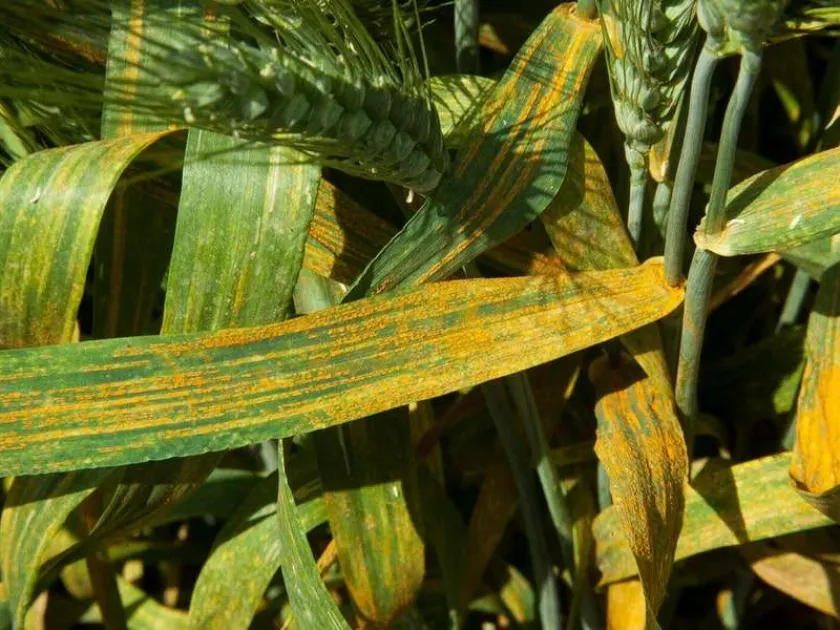
The most prominent symptom of yellow rust is the appearance of bright yellow or orange pustules arranged in clear, parallel rows along the veins of the leaf.
This characteristic striped pattern is the main distinguishing feature of the disease. In advanced stages, these stripes appear as if they were drawn with a marker.
As the infection progresses, the infected leaves begin to wither, curl, and die prematurely. This loss of photosynthetic area severely impacts the plant's energy production.
In severe cases, pustules can appear on the glumes and even the grains, causing significant deformation and a reduction in grain quality.
The yellow dust observed on the leaves when touching infected plants is composed of thousands of spores ready to be dispersed by the wind.
Pathogen
The causative agent of yellow rust is the fungus Puccinia striiformis. It is a highly specialized, obligate biotrophic pathogen that infects wheat, rye, and various wild grasses.
The fungus exists as different physiological races, which complicates the selection of resistant crop varieties. It primarily spreads through urediniospores carried by wind currents.
The pathogen is known for its ability to survive the winter in the form of urediniospores on winter cereal crops and volunteer plants, making it a persistent threat.
The life cycle involves the formation of uredinia, which are responsible for the secondary infection cycles that can devastate a field in a matter of weeks.
Its biological adaptation allows it to colonize host tissues rapidly, particularly in cooler regions where other rust species might be less active.
Conditions for development
Yellow rust thrives in cool and moist environments. The optimal temperature range for infection is between 9°C and 15°C (48°F–59°F).
Periods of high humidity, dew, and intermittent light rain are ideal for spore germination. The fungus does not require high heat to proliferate, which is why it often hits crops early in the season.
Poor ventilation within dense crop canopies creates a microclimate with stagnant moist air, which significantly accelerates the spread of the pathogen.
Extended cool, cloudy weather patterns are the primary drivers of large-scale epidemics in cereal fields.
Rapidly growing, lush vegetation caused by high nitrogen applications can sometimes exacerbate the issue by creating a more favorable environment for spore attachment and colonization.
Why it matters
The primary impact of yellow rust is the reduction of green leaf area, which directly leads to lower photosynthetic efficiency and stunted plant growth.
Yield losses are caused by the production of shriveled, light-weight grains, which significantly reduces the overall grain yield and quality for milling.
Economic losses can be substantial, often reaching 30% to 70% in susceptible varieties during peak infection years, necessitating costly chemical interventions.
Plants affected by the disease are significantly weakened, making them more susceptible to subsequent environmental stressors, such as drought or secondary infections.
In addition to grain yield, the loss of nutritional quality can negatively affect the value of the harvest, impacting both farmers' profits and livestock feed quality.
Protection
The most effective strategy for managing yellow rust is the cultivation of genetically resistant wheat and rye varieties, which is the cornerstone of integrated disease management.
Agronomic practices, such as removing volunteer plants and practicing crop rotation, help break the life cycle of the fungus and reduce initial inoculum levels.
Proactive field monitoring should begin early in the spring, focusing on detecting initial pustules before they spread throughout the entire crop.
Fungicide application using systemic products, particularly triazoles or strobilurins, is recommended when the disease threshold is reached to protect the flag leaf.
Proper nutrient management, ensuring balanced levels of phosphorus and potassium, helps improve the overall vigor and natural disease resistance of the cereal plants.
Pathogens and affected parts
Affects crops · 2
Discussion
No discussions yet — be the first.