
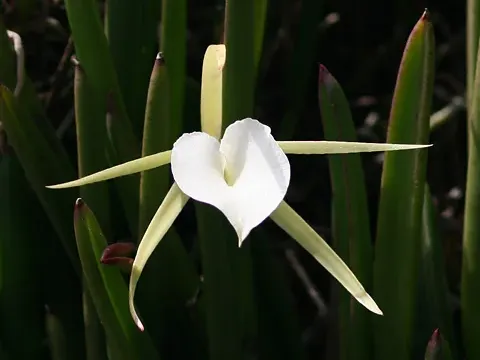
Brassavola
Brassavola
Brassavola is a genus of epiphytic and lithophytic orchids within the Orchidaceae family, native to tropical regions across Central and South America. These plants are well-known for their aromatic, often nocturnal, white-flowered blooms.
What the section contains


Brassavola
Cultivation requires bright, filtered light to stimulate vigorous growth and flowering. While they can tolerate some direct morning or late afternoon sun, protecting them from intense midday heat is crucial to prevent leaf scorching.
They thrive in high humidity environments, ideally ranging from 60% to 80%. Proper air circulation is just as important as humidity, as stagnant air often leads to fungal outbreaks and stunted development of new growths.
The potting medium must be coarse and airy. High-quality fir bark, charcoal, and perlite mixtures are preferred to ensure rapid drainage, which mimics the natural habit of growing on tree branches where roots are exposed to air.
Watering should be rhythmic, allowing the medium to dry out almost completely between sessions. During the winter rest period, watering frequency should be reduced, though the plant should never be allowed to dehydrate completely.
Common issues include root rot caused by chronic overwatering or improper drainage in the container. When the roots remain wet for too long, they lose their ability to absorb nutrients and begin to decay, leading to plant decline.
Pests like scale insects and mealybugs are frequently encountered in orchid collections. These insects cluster in leaf axils or under the leaves, draining the sap and potentially transmitting viral or bacterial infections.
Fungal infections such as leaf spot are signs of poor environmental conditions, often linked to high humidity without sufficient ventilation. Immediate removal of affected leaves and treatment with systemic fungicides is necessary.
Thrips can also be a nuisance, damaging the delicate flower buds and preventing them from opening properly. Regular monitoring and the use of sticky traps can help detect infestations early.
Maintaining a clean growing area and sterilizing cutting tools between plants significantly reduces the risk of spreading diseases. Vigilance and proper cultural techniques remain the most effective strategy for healthy Brassavola growth.