
Brassavola flagellaris
Brassavola flagellaris
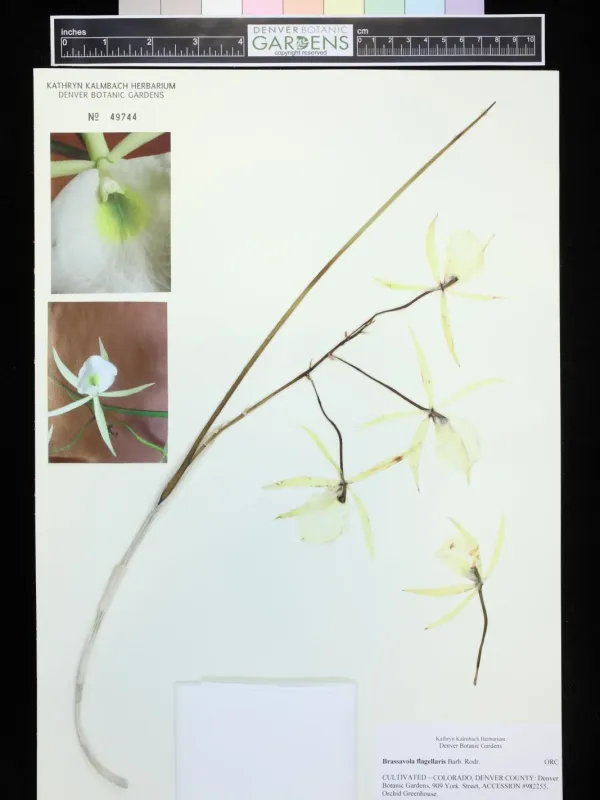
Description
Growing requirements
Brassavola flagellaris is a fascinating epiphytic orchid species belonging to the Orchidaceae family, native to the tropical forests of Brazil. Its distinctive morphology includes cylindrical, leathery leaves that form long, whip-like structures, allowing the plant to thrive in canopy environments.
In cultivation, this orchid requires bright, filtered light to maintain healthy growth and encourage flowering. Direct sunlight should be avoided during peak hours, as it can easily scorch the succulent leaves. A south-facing window with sheer curtains or an east-facing location is usually ideal.
Temperature management is crucial for the health of Brassavola flagellaris. The species prefers warm conditions during the growing season, typically between 22°C and 28°C. During the cooler winter months, it benefits from a slight reduction in temperature to trigger reproductive cycles, but it should not drop below 15°C.
Regarding soil and moisture, this species is an epiphyte and must be grown in a coarse, well-draining substrate like orchid bark mixed with perlite or charcoal. Watering should be thorough but intermittent; the roots require a drying cycle between waterings to prevent the development of root rot.
Regular fertilization is necessary during the active growing season. A balanced, water-soluble orchid fertilizer applied at half strength is recommended. Maintaining high ambient humidity levels, ideally between 60% and 70%, is essential for the plant to thrive, as it supports its specialized photosynthetic needs.
Main diseases and pests
The primary pests affecting Brassavola flagellaris are scale insects and spider mites, which often target the plant in dry environments. Monitoring the underside of the leaves and the base of the pseudobulbs is vital for early detection and manual removal of these pests.
Bacterial and fungal pathogens pose the greatest threat to this orchid, often manifesting as black spots or soft rot. These infections are almost always linked to poor air circulation and excessive moisture retention within the potting medium or around the crown of the plant.