
Brassavola nodosa
Brassavola nodosa
Description
Growing requirements
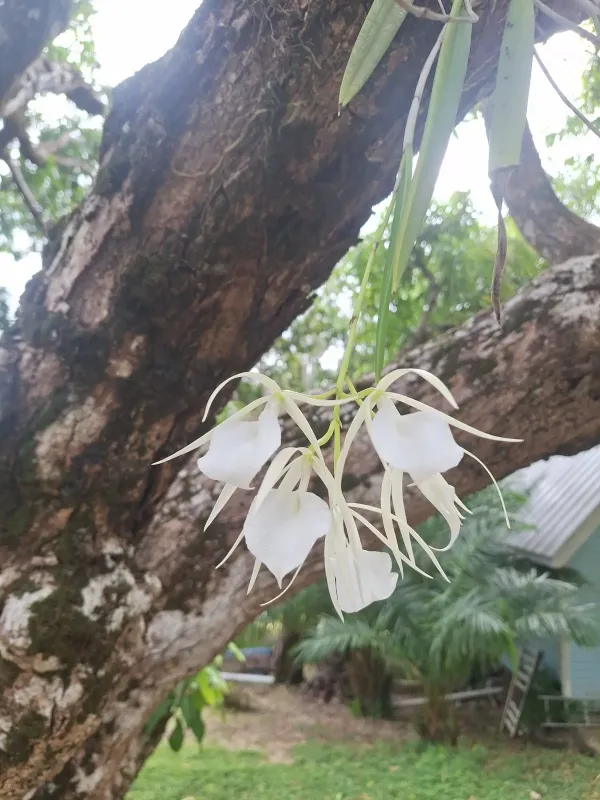
Brassavola nodosa is a species of epiphytic orchid native to the tropical regions of Central and South America. Often referred to as the "Lady of the Night" orchid, it is highly valued for its intense, gardenia-like scent released primarily after dark to attract night-flying pollinators.
This orchid requires high levels of bright, indirect sunlight to thrive. Exposure to direct midday sun can result in leaf scorching, while insufficient light leads to stunted growth and a complete failure to produce flowers. A location with good natural light exposure is essential for maintaining plant vigor.
Regarding temperature and climate, the plant prefers warm conditions, ideally ranging from 20°C to 28°C. A consistent drop in temperature during the night is vital for the physiological maturation of the pseudobulbs, which subsequently triggers the development of flower spikes during the blooming season.
The choice of potting medium is crucial for this species. Being an epiphyte, it needs a fast-draining substrate, typically composed of high-quality pine bark, perlite, and charcoal. Good airflow around the roots is necessary to prevent rotting, which is the most common cause of plant mortality.
Watering should be performed carefully, allowing the root system to dry out between applications. During the active growth phase, fertilization with a balanced orchid fertilizer at half-strength is recommended to provide essential nutrients without burning the sensitive root tips or creating salt buildup.
Main diseases and pests
Common pests include scale insects and mealybugs, which tend to hide in the tight spaces between pseudobulbs and leaves. Regular inspections are necessary, and infestations should be addressed immediately using horticultural oils or systemic insecticidal soaps to prevent damage to the foliage.
Fungal pathogens and root rot are prevalent in environments with stagnant air or excessive moisture levels. To mitigate these risks, always ensure the orchid pot has adequate drainage, avoid overhead watering late in the day, and maintain good air circulation throughout the growing area.