
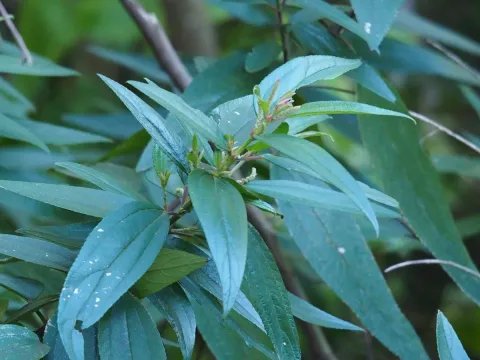
Ramie
Boehmeria
The planting of ramie (specifically Boehmeria nivea) is primarily carried out through vegetative propagation—using rhizomes or cuttings, as seed propagation is less effective for industrial plantations.
What the section contains
 Boehmeria biloba
Boehmeria biloba
Boehmeria biloba
 Boehmeria cylindrica
Boehmeria glomerulifera
Boehmeria glomerulifera
Boehmeria cylindrica
Boehmeria cylindrica
Boehmeria glomerulifera
Boehmeria glomerulifera
 Boehmeria grandis
Boehmeria grandis
Boehmeria grandis
 Boehmeria japonica
Boehmeria longispica
Boehmeria longispica
Boehmeria japonica
Boehmeria japonica
Boehmeria longispica
Boehmeria longispica
 Boehmeria nipononivea
Boehmeria nipononivea
Boehmeria nipononivea
 Boehmeria penduliflora
Boehmeria penduliflora
Boehmeria penduliflora
 Boehmeria platanifolia
Boehmeria ramiflora
Boehmeria ramiflora
Boehmeria repens
Boehmeria repens
Boehmeria platanifolia
Boehmeria platanifolia
Boehmeria ramiflora
Boehmeria ramiflora
Boehmeria repens
Boehmeria repens
 Boehmeria sieboldiana
Boehmeria sieboldiana
Boehmeria sieboldiana
 Boehmeria spicata
Boehmeria spicata
Boehmeria spicata
 Boehmeria stipularis
Boehmeria stipularis
Boehmeria stipularis
 Boehmeria tricuspis
Boehmeria tricuspis
Boehmeria tricuspis
 Boehmeria virgata
Boehmeria virgata
Boehmeria virgata
 Boehmeria zollingeriana
Boehmeria zollingeriana
Boehmeria zollingeriana
Ramie
The optimal time for establishing plantations is when the soil temperature warms up to 12–15 degrees Celsius, ensuring rapid root development.
To ensure optimal crop density, rhizomes are planted in furrows at a depth of 8–10 centimeters, maintaining row spacing between 60 and 90 centimeters.
Since the crop is a perennial, the establishment phase requires thorough soil preparation, including the application of organic and mineral fertilizers prior to planting.
After planting, it is crucial to provide regular irrigation, especially during the first few weeks, to maintain sufficient moisture for the initial growth of shoots.
Ramie belongs to the Urticaceae family and is a heat-loving plant that requires consistently high temperatures throughout the growing season.
The crop performs best in fertile, deep, well-aerated loam or sandy loam soils with a neutral or slightly acidic pH balance.
A vital requirement for successful cultivation is high humidity and soil moisture; the plant is highly sensitive to prolonged droughts and does not tolerate waterlogging.
To ensure high-quality bast fiber production, the plant requires a long growing season free from frosts, as the aerial parts are killed by freezing temperatures.
The plant responds well to intensive nitrogen fertilization, which stimulates rapid stem growth and enhances the quality characteristics of the produced fiber.
The yield of ramie is directly linked to the age of the plantation, with peak performance typically reached during the 3rd to 6th years of growth.
On an industrial scale, a hectare can yield up to 15–20 tons of green biomass across several harvesting cycles within a single growing season.
The yield of cleaned dry fiber after primary processing accounts for approximately 4–6 percent of the total raw stem weight, depending on the variety and nutrition.
Economic applications primarily center on the textile industry, where ramie fiber is highly valued for its exceptional strength, resistance to rotting, and silky luster.
Thanks to the plant's perennial lifecycle, farmers benefit from stable yields without the need for annual plowing and re-seeding of the entire field.
The main threat to ramie is root rot, which occurs when drainage is poor and moisture stagnates in the root zone for extended periods.
Under high-humidity conditions, various fungal leaf spots can develop, reducing the plant's photosynthetic efficiency and slowing down shoot growth rates.
Regarding pests, various leaf-eating insects, including certain caterpillars, cause the most damage by potentially destroying large areas of the foliage within a short time.
Nematodes represent a hidden threat, as they attack the root system and cause general stunted growth of the plantation, leading to premature plant decline.
To control pest populations and prevent diseases, it is highly recommended to practice crop rotation and use only healthy, certified planting material.
Harvesting of ramie is conducted during the phase of technical maturity, when stems reach maximum height but before they become excessively lignified.
In regions with tropical climates, it is possible to carry out three to four harvests per season, making the crop highly productive under intensive management.
Stems are collected mechanically or manually, and the process of bark separation to extract the fiber must begin immediately after harvesting.
A critical step is decortication—the removal of the outer skin from the stem, which must be completed before the raw material begins to dry out and oxidize.
Following extraction, the fiber is washed and dried to prevent mold development and to preserve the material's structural integrity for subsequent textile processing.