
Boehmeria platanifolia
Boehmeria platanifolia
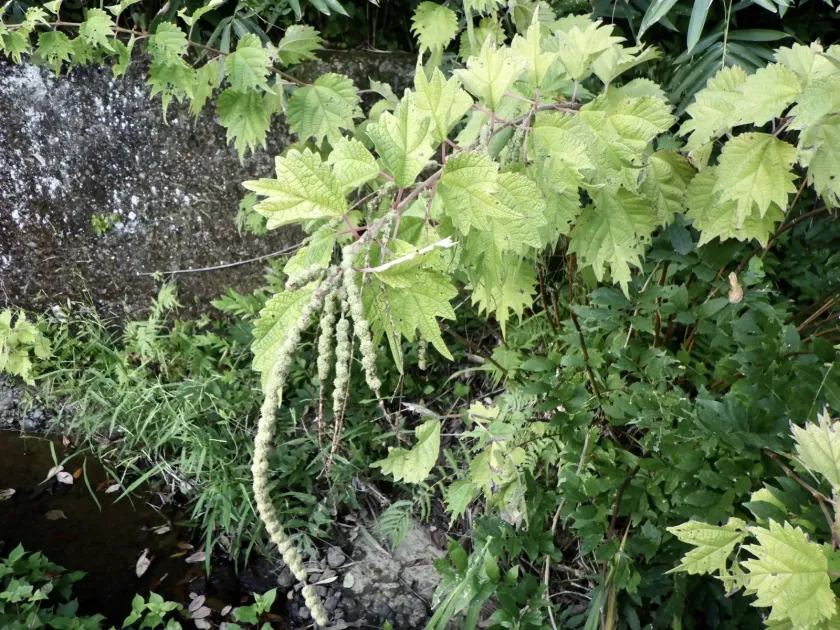
Description
Sowing dates
The sowing of Boehmeria platanifolia seeds is typically carried out in the spring, once the soil has warmed to a temperature of 12–15°C. The optimal timing for sowing is generally the second half of April or early May.
To ensure uniform germination, the seeds require pre-sowing preparation, which includes stratification. Planting is performed in rows with spacing of 45–60 cm, ensuring optimal plant density for high biomass production.
Seedlings develop relatively slowly during the first month. During this stage, it is crucial to control weed competition, as the crop is quite sensitive to interference in its early growth phases.
The planting depth for seeds should not exceed 1–2 centimeters. Given their small size, Boehmeria seeds require consistent moisture in the topsoil layer until stable sprouts emerge.
For vegetative propagation, division of rhizomes is performed in early spring. This method allows for more uniform plantation productivity compared to establishing the crop from seeds.
Growing requirements
Boehmeria platanifolia, a member of the Urticaceae family, is a perennial herbaceous plant. It thrives in well-drained, fertile loamy soils with a neutral or slightly acidic pH level.
The crop has high requirements for moisture availability. It grows best in regions with a moderately humid climate and lacks significant temperature fluctuations during the summer growing season.
Successful growth requires a location protected from strong winds. The plant tolerates partial shade, making it a suitable candidate for agroforestry systems or as an understory crop.
The optimal temperature range for active growth is between 18°C and 25°C. While frost can damage young shoots, the established rhizome system possesses sufficient hardiness to survive winter dormancy.
Field maintenance involves regular weeding, inter-row cultivation, and the application of organic fertilizers. Boehmeria responds positively to nitrogen applications, which stimulate the production of fiber-rich biomass.
Yield
The economic value of Boehmeria platanifolia lies in its high-quality bast fiber. Yields depend on the age of the plantation and the soil fertility, typically peaking in the third or fourth year of establishment.
Harvesting is performed during the technical maturity phase, when lower leaves begin to turn yellow and the stems reach maximum structural integrity. This is the stage where fiber quality and content are optimal.
Under intensive management, a hectare can produce a significant volume of green biomass. Processing the harvested raw material allows for the extraction of fibers valued for their strength, flexibility, and decay resistance.
Beyond fiber, processing by-products can be utilized as animal feed supplements or in the pulp and paper industry, making the crop potentially zero-waste in industrial applications.
Fiber yield figures vary significantly based on the primary processing method used. Mechanical decortication followed by biochemical cleaning is the standard approach to achieving textile-grade quality.
Main diseases and pests
Common pests include various leaf beetles and aphids, which can cause significant leaf damage during hot, dry periods. Prevention relies on proper crop rotation and population monitoring.
Fungal diseases, such as powdery mildew and various leaf spots, pose the greatest threat, especially under conditions of high humidity and poor ventilation within the crop canopy.
Root rots may occur in heavy, waterlogged soils where water stagnation is present. Improving drainage and soil aeration is the primary strategy for managing these pathogens.
Implementing an integrated pest management (IPM) system is recommended to protect plantations. This includes the use of biological control agents to minimize pesticide residues on the final product.
Maintaining strong plant immunity remains a key defense factor, achieved through a balanced nutrient program, particularly potassium, which strengthens cell wall development.
Harvesting
Harvesting Boehmeria requires strict adherence to timing to ensure high-quality bast fiber. Stems are mowed using specialized equipment as close to the soil surface as possible to protect the rhizome.
Immediately after mowing, primary processing occurs, which involves separating the bark from the woody core. This is a critical stage that determines the long-term quality and durability of the fiber.
Harvested material must be dried in well-ventilated structures or on covered outdoor platforms to prevent mold development and fiber discoloration during the storage phase.
Transportation of raw material must be rapid, as freshly cut stems are prone to overheating and enzymatic processes that significantly degrade fiber quality.
As a perennial crop, a single plantation can be harvested for several years. After each harvest, it is common to mulch the field or perform hilling to insulate rhizomes against winter temperatures.