
Boehmeria zollingeriana
Boehmeria zollingeriana
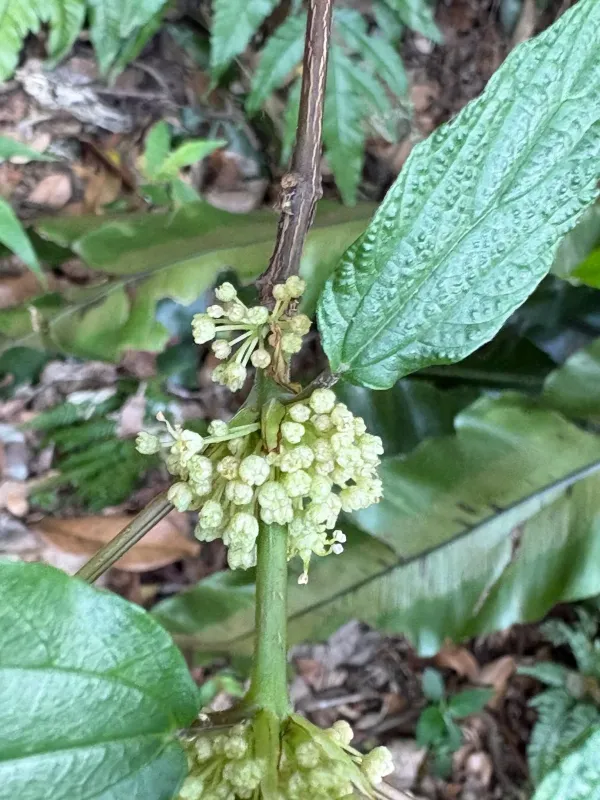
Description
Sowing dates
Sowing Boehmeria zollingeriana is typically performed in early spring or at the onset of the rainy season to ensure sufficient moisture for seed germination.
The seeds are small, requiring a well-prepared, fine-textured seedbed to ensure proper contact with the soil for successful emergence and seedling development.
Propagation via stem cuttings is a common practice, as it provides more uniform growth and faster crop establishment compared to seed propagation.
Row spacing is tailored to the intended end-use, with denser spacing preferred for fiber production to encourage vertical growth and reduce lateral branching.
Before sowing, it is essential to ensure the soil is free of aggressive perennial weeds that could easily outcompete the young Boehmeria plants.
Growing requirements
This species, belonging to the Urticaceae family, thrives in warm, humid climates and is primarily found in tropical and subtropical regions of the world.
The plant requires deep, fertile, and well-drained soils, ideally with a slightly acidic to neutral pH, to support its rapid and vigorous biomass production.
Regular water supply is critical, particularly during the active growing phase, to maintain steady stem elongation and prevent the plant from becoming stunted.
While the plant benefits from high light intensity, it has a moderate tolerance for shade, which is often observed in its natural understory habitats.
Consistent nutrient management, specifically nitrogen fertilization, is necessary to sustain high yields of biomass, as the crop extracts significant nutrients from the soil.
Yield
Boehmeria zollingeriana is recognized for its high-quality bast fiber, which is durable and resistant to microbial degradation, making it valuable for textiles.
Beyond fiber, the biomass can serve as a protein-rich forage for livestock, contributing to integrated farming systems in various rural areas.
The harvest cycle can be repeated multiple times per year, provided that the soil fertility is maintained through systematic fertilization and organic matter amendments.
The fiber extracted from the stems is versatile, used in the manufacturing of durable ropes, fishing nets, and specialized ecological fabric materials.
Modern breeding focuses on enhancing fiber content and stem length to maximize the economic output per hectare for commercial growers.
Main diseases and pests
Leaf-eating insects represent the primary pest challenge, capable of causing significant defoliation that slows down the overall physiological development of the plant.
Root rot diseases often occur in poorly drained soils where stagnant water promotes the growth of pathogenic fungi, compromising the entire root system.
Foliar diseases, such as fungal spots, can lower the quality of the harvested fiber and necessitate the use of integrated pest management practices.
Nematodes are another persistent issue in tropical soils, which can weaken the plant's health and make it more susceptible to environmental stress and pathogens.
Crop rotation and selecting resistant varieties are effective strategies for mitigating risks and maintaining the long-term productivity of the plantation.
Harvesting
Harvesting is typically timed based on the maturity of the stems, as fiber quality peaks just before the plant enters the full reproductive stage.
Mechanical harvesting equipment is used to ensure clean, precise cutting, which minimizes injury to the plant base and encourages healthy regrowth.
Immediately after cutting, the stems undergo extraction processes, as delay leads to rapid oxidation and degradation of the natural fibers.
Post-harvest handling involves drying the fiber under controlled conditions to ensure proper moisture content and prevent mold development in storage.
Proper grading of the fiber according to length and fineness is a critical commercial step that determines the premium value of the harvested raw material.