
Boehmeria grandis
Boehmeria grandis
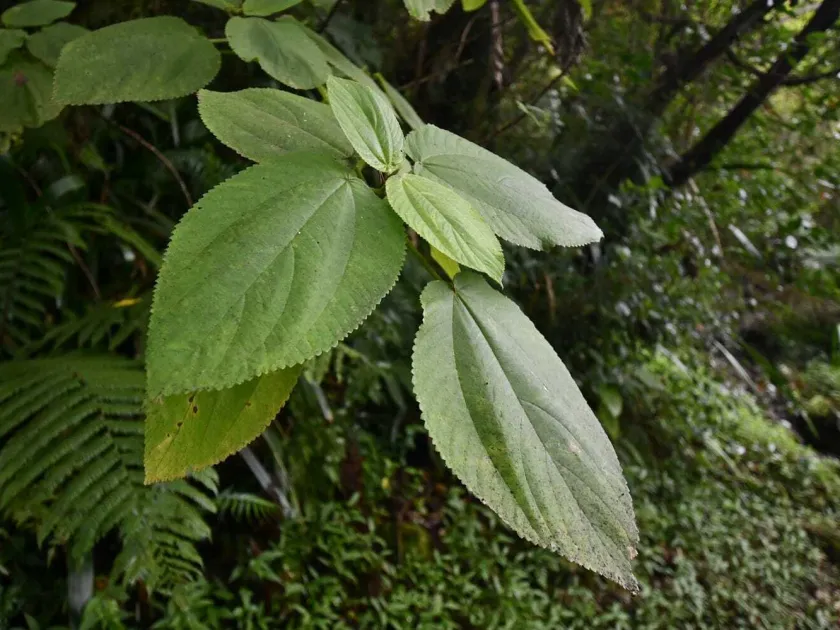
Description
Sowing dates
Boehmeria grandis, a member of the Urticaceae family, is a perennial plant primarily cultivated for its high-quality bast fiber. Planting is typically conducted in the spring season when soil temperatures reach 15–18 degrees Celsius, ensuring optimal germination and establishment.
Choosing an appropriate site is crucial for this crop, as it requires well-lit areas shielded from strong, damaging winds. Careful preparation of the seedbed is necessary to provide a loose, nutrient-rich medium for the roots to develop.
The plant can be propagated either by seeds or through vegetative methods such as root division or stem cuttings. Vegetative propagation is often favored to maintain uniformity across the plantation, which is vital for standardized fiber production.
Spacing between plants must be managed precisely to encourage the growth of long, straight stems. High-density planting without sufficient airflow can be detrimental, leading to increased humidity around the lower parts of the plant.
Seedlings raised in protected environments should be hardened off before being transplanted into the open field to prevent transplant shock. This ensures a consistent and successful crop stand throughout the growing season.
Growing requirements
Boehmeria grandis thrives in fertile, well-draining loamy soils with a pH ranging from neutral to slightly acidic. Effective drainage is essential, as the roots are highly susceptible to rot in waterlogged conditions.
Water requirements are significant during the peak growth phase. Providing regular, consistent irrigation helps maintain turgor pressure in the stems, which is necessary for producing long, flexible fibers suitable for industrial spinning.
The crop is well-suited to tropical and subtropical climates, requiring protection from severe frost. In areas with colder winters, the plant enters a period of dormancy, necessitating protection for the crown and root system.
Regular maintenance including inter-row cultivation is vital to aerate the soil and control invasive weeds that compete for nutrients. The soil surface should be kept loose to promote healthy microbial activity.
Strategic fertilization, particularly with nitrogen and potassium, plays a key role in maximizing biomass production. Application timing should align with the stages of rapid vegetative development for the best results.
Yield
The yield of Boehmeria grandis is primarily measured by the quality and quantity of the extracted bast fiber. Proper management of the plant density and nutrient supply directly translates into higher fiber outputs per hectare.
Harvesting timing is a critical factor influencing both yield and quality. Stems must be cut at the precise stage of maturity to ensure the fibers have achieved maximum strength and flexibility before they become overly woody.
Modern processing methods significantly enhance the recovery of clean fiber from the harvested stems. Reducing waste during the decortication process is a major goal for improving the economic feasibility of the crop.
Consistent agricultural practices, including targeted irrigation and pest management, help stabilize yields over consecutive years. Since it is a perennial crop, maintaining plant health throughout the season is essential for long-term production.
Yield metrics also consider the physical dimensions of the fibers, such as length and tensile strength. These properties are highly sought after in the textile industry for high-value fabric production.
Main diseases and pests
The primary threats to Boehmeria grandis plantations include fungal diseases that flourish in high-humidity microclimates. Managing humidity and spacing are the first lines of defense against these pathogens.
Various insect pests can damage the foliage, reducing the photosynthetic capacity of the plant. Monitoring and early intervention are essential to preventing massive infestation that could stunt growth and reduce fiber yields.
Nematodes represent a significant below-ground threat, damaging roots and weakening the plant's nutrient uptake. Crop rotation and soil sanitization techniques are recommended to mitigate nematode populations.
Weed control is essential not only for resource competition but also because weeds can harbor secondary pests and disease vectors. Maintaining clean fields significantly reduces the pressure from these biological threats.
In case of disease outbreak, prompt removal and destruction of affected plant tissues are necessary to contain the spread. Integrated pest management strategies provide a sustainable framework for long-term health.
Harvesting
Harvesting involves cutting the stems close to the base, taking care not to damage the plant's crown. Mechanized harvesters have been adapted to handle the tough, fibrous stems efficiently.
Post-harvest handling must be quick, as the stems should be processed shortly after cutting to prevent fiber degradation. If immediate processing is not possible, stems should be kept in a cool, ventilated area.
The fibers are separated from the woody core through a process of decortication and retting. Careful control of these biological and mechanical processes ensures that the fibers retain their natural integrity.
Drying the extracted fibers is the final step before storage. Proper drying prevents the onset of mold, which could permanently discolor the fibers and compromise their mechanical properties.
Once dried, the fiber is baled and categorized based on quality parameters. Proper storage in a controlled environment ensures the product remains in peak condition until it reaches the manufacturing facility.