
Boehmeria biloba
Boehmeria biloba
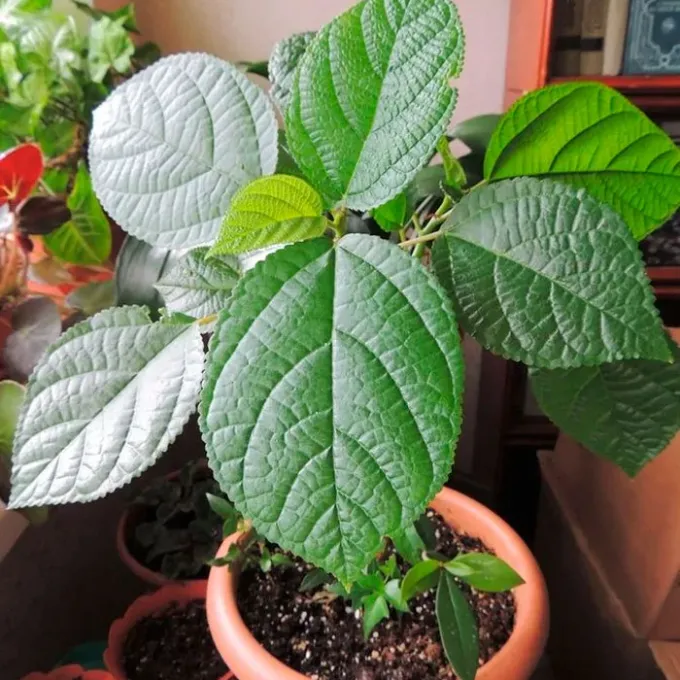
Description
Sowing dates
Sowing of Boehmeria biloba is performed in the spring, once the soil has warmed to a temperature of 12–15 degrees Celsius. The optimal time for planting seeds or seedlings is the second half of April or early May, depending on the specific climatic region.
To obtain high-quality fiber, it is crucial to maintain a high planting density, which encourages the development of straight, long stems with a minimal number of side branches. A row-seeding method with spacing of about 30–45 centimeters is recommended.
The seeds of this crop are quite small, so they should be sown at a shallow depth, not exceeding 1–2 centimeters. The soil surface should be well-compacted after sowing to ensure optimal seed contact with the moist substrate.
Boehmeria can be propagated both generatively via seeds and vegetatively through rhizome division or stem cuttings. Vegetative propagation is frequently employed in specialized nurseries to preserve specific varietal characteristics.
Seedlings emerge within 14–21 days, provided that regular irrigation is maintained. During this period, it is critically important to ensure weed control, as young plants develop slowly and are easily suppressed by competitive vegetation.
Growing requirements
Boehmeria biloba belongs to the Urticaceae family and has high requirements regarding soil moisture levels. It performs best in fertile, loose, and well-drained loamy soils rich in organic matter.
The crop is heat-loving, yet exhibits moderate cold hardiness in the root zone under temperate climate conditions. The optimal temperature for active vegetative growth ranges from 20 to 28 degrees Celsius.
The plant prefers well-lit areas, although it can tolerate light shading during peak daylight hours. A vital factor for successful cultivation is protection from strong winds, which can damage the fragile stems.
Soil pH requirements vary between slightly acidic and neutral (pH 6.0–7.0). Excessive soil acidity leads to a reduction in the yield of quality fiber and a weakening of the plant's natural immunity.
Regular application of nitrogen fertilizers during the active stem growth phase promotes increased vegetative mass. However, an excess of nitrogen can make the stems more brittle, which negatively impacts the quality of the raw material.
Yield
The primary economic product of Boehmeria biloba is its durable bast fiber, which possesses physical and mechanical properties close to ramie fiber. The yield of processed fiber depends directly on the agronomic management and the timing of the harvest.
Under intensive cultivation, the dry stem yield can reach impressive figures, comparable to other technical crops within the Urticaceae family. Stable yields are achievable through crop rotation and by preventing soil depletion.
Fiber quality is evaluated based on length, elasticity, and the absence of woody residues. The optimal harvest time determines not only the total quantity but also the marketability of the textile raw material.
The biological nature of the species allows for multiple harvests throughout the season in southern latitudes, which significantly increases the cumulative yield per hectare. Maintaining high productivity in perennial plantations requires annual application of organic fertilizers.
The economic efficiency of the crop is driven by the processing of stems into fiber for the production of high-quality yarn, canvas, or technical fabrics, which are valued for their resistance to decay and high tensile strength.
Main diseases and pests
Boehmeria can suffer from various types of leaf spot diseases that become active under high humidity conditions. Fungicides with systemic action are applied at the beginning of the vegetative period to control fungal pathogens.
Root rots pose the greatest threat when water stagnates in heavy soils. Prevention focuses on establishing effective drainage systems and avoiding over-irrigation.
Common pests include aphids and spider mites, which suck sap from young leaves, slowing stem growth. To control pest populations, the use of biological agents or insecticides is recommended once damage thresholds are reached.
Slugs and snails can cause serious damage to young plantings by feeding on leaves and growing points. Control measures involve manual removal and maintaining clear, weed-free inter-row spaces.
Nematodes are also a potential threat, attacking the root system and causing general plant stunted growth. It is recommended to follow strict phytosanitary rules and use disinfected planting material to prevent the spread of these pests.
Harvesting
The harvesting of Boehmeria stems is carried out during the peak flowering phase, when the fiber content is at its maximum and quality is at its peak. Delaying the harvest leads to fiber coarsening and a reduction in elasticity.
The stems are cut using specialized machinery that ensures a clean cut at the base. Following harvest, primary processing is conducted, involving leaf stripping and the removal of the outer bark to separate the bast layer.
The process of decortication (fiber separation) is labor-intensive and requires careful control of temperature and humidity during drying. It is crucial to avoid leaving the cut mass in the field for too long to prevent loss of color and fiber strength.
After the main harvest in perennial cultivation, the root system is mulched or hilled up to prepare for the winter period. This helps maintain the plantation's viability for subsequent years.
Transportation of raw material to processing plants must be carried out in well-ventilated containers to eliminate the risk of self-heating and mold growth on moist stems before industrial processing begins.