
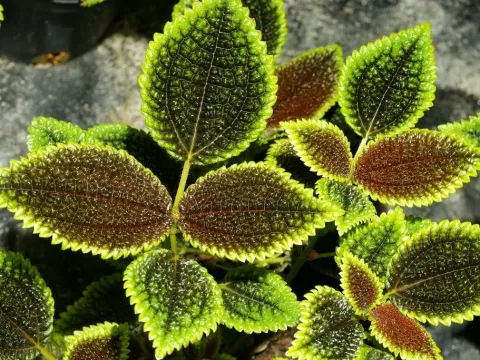
Pilea
Pilea Lindl.
Pilea (Pilea Lindl.) is a large genus of annual and perennial herbaceous plants and subshrubs belonging to the Urticaceae family. These plants are native to tropical and subtropical regions across the globe, typically thriving in moist, shaded environments.
What the section contains


Pilea
Cultivating Pilea successfully requires a steady environment with temperatures ranging from 18°C to 25°C. It is essential to protect these plants from drastic temperature fluctuations and cold drafts, which can cause significant foliage drop.
The optimal soil for Pilea is a well-draining, porous mixture. A combination of peat, leaf mold, and perlite or coarse sand provides the necessary aeration and moisture retention that the root system requires for healthy development.
Pilea plants flourish in bright, indirect light. While they can adapt to lower light levels, bright light encourages more robust growth and more intense coloration, particularly in variegated species or cultivars.
Watering requirements involve allowing the top layer of the soil to dry out between sessions. Overwatering is the most common cause of plant failure, leading to root rot and other systemic issues that stunt development.
The primary threats to Pilea health are fungal diseases triggered by high humidity levels combined with poor air circulation. Root rot is particularly prevalent when the root zone remains saturated for long periods.
Pests that frequently infest Pilea include spider mites, mealybugs, and scale insects. These pests feed on the cell sap, leading to stunted growth, yellowing leaves, and eventual loss of vigor if left untreated.
Effective pest management involves using appropriate insecticides or insecticidal soaps, along with physical removal of infected parts. Maintaining optimal humidity levels can also discourage the proliferation of spider mites.
Cultural imbalances often manifest as leaf spots or dropping leaves. Providing a balanced fertilizer during the growing season helps the plant maintain its natural resistance to environmental stress.
Regular sanitation, such as removing dead foliage and inspecting the plant for early signs of infestation, is crucial for preserving the health and aesthetic quality of the collection.