
Boehmeria cylindrica
Boehmeria cylindrica
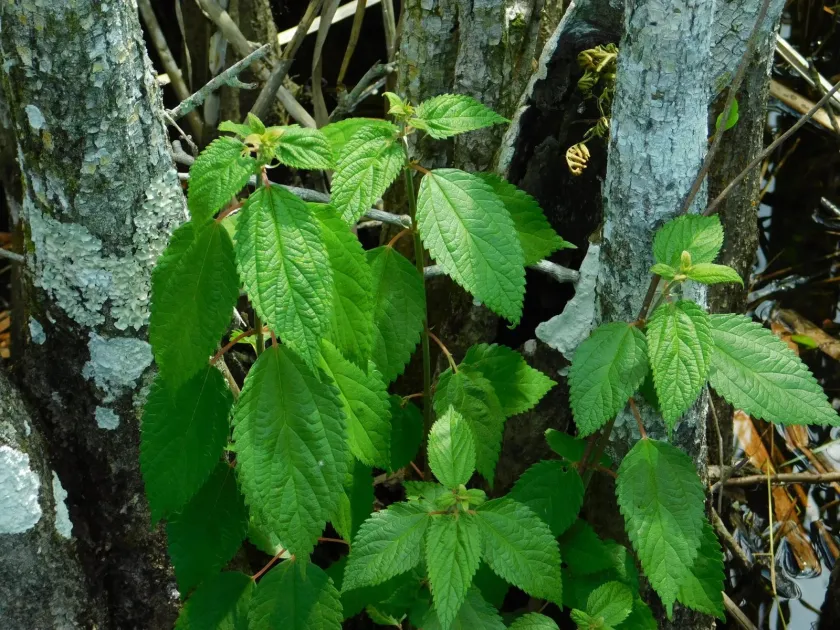
Description
Sowing dates
Boehmeria cylindrica is a perennial herbaceous plant that requires careful planning regarding the timing of its establishment in the field.
Sowing should take place in early spring once the soil temperature is consistently above the threshold for seed germination.
Since the seeds are quite small, sowing depth must be minimal, as deeper planting often prevents the seedling from reaching the surface.
Commercial producers often prefer using seedlings started in greenhouses to ensure higher survival rates and more uniform plant density.
Once established, the plants develop strong root systems that support perennial growth, provided the management practices remain consistent.
Growing requirements
Belonging to the Urticaceae family, this species thrives in wet habitats, such as riparian zones or areas with naturally high moisture levels.
The ideal soil for this crop is rich in organic matter, moist, and slightly acidic, reflecting its natural preference for forest floor conditions.
Boehmeria cylindrica displays significant shade tolerance, making it suitable for cultivation in areas where sunlight is limited by canopy cover.
Temperature requirements include temperate conditions during the growing season to allow for optimal lignification of the plant stems.
Adequate water supply is essential throughout the season; even brief periods of drought can cause wilting and stunted growth in young plants.
Main diseases and pests
Fungal infections, particularly root rot, are common threats when the plant is grown in soil with poor drainage or stagnant water.
Various foliar pests, including beetles and aphids, may target the foliage, causing significant leaf tissue damage during the peak season.
Powdery mildew can appear under humid conditions, negatively affecting the overall health and yield of the fiber-producing plants.
Stem borers pose a specific risk to the quality of the harvest by interfering with the development of the fibrous inner bark tissues.
Effective management strategies emphasize monitoring, removing infected plant debris, and maintaining proper plant spacing for aeration.
Harvesting
The harvest cycle for this fiber plant is typically determined by the maturation stage of the stalks, which contain the valuable fiber.
Timing the harvest is crucial as it affects both the quantity and the physical properties of the extracted plant fibers.
The stems are generally cut close to the ground, allowing for regrowth from the perennial rootstock in the following season.
Mechanical harvesting equipment is often adapted to handle the specific structure of the stalks while minimizing damage to the root system.
Post-harvest processing involves retting and mechanical cleaning to separate the high-quality fibers from the woody core and other tissues.