


SKU #66584
·
30 views
ONEGA
Wild Strawberry, Strawberry
User rating
0 votes0% positive reviews
No ratings yet — be the first.
Fruiting
Non-remontant variety
Berry Weight
10-20 grams, 10-15
Growing Method
Open Ground
Ripening Period
Average (40-50)
About product

The Onega strawberry variety was bred at the Leningrad Fruit Experimental Station by crossing the Festivalnaya and Krasavitsa varieties. It is a large-fruited, mid-season, universal, and non-remontant variety intended for cultivation in northwestern regions. The bushes are powerful, upright, and well-leafed, with large green leaves of medium rugosity and smooth surface. The peduncles are long, of…
Fruiting
Non-remontant variety
Berry Weight
10-20 grams, 10-15
Growing Method
Open Ground
Ripening Period
Average (40-50)
Description
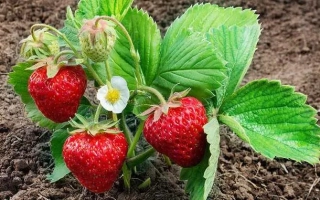
The Onega strawberry variety was bred at the Leningrad Fruit Experimental Station by crossing the Festivalnaya and Krasavitsa varieties. It is a large-fruited, mid-season, universal, and non-remontant variety intended for cultivation in northwestern regions. The bushes are powerful, upright, and well-leafed, with large green leaves of medium rugosity and smooth surface. The peduncles are long, of medium thickness, and densely hairy; the inflorescences are compact and multi-flowered. Crowns are formed in an average quantity, are of medium thickness and pale red in color. Onega variety berries have a correct conical shape with a neck, dark red or red in color, and a glossy surface. The average berry weight is about 13 grams. The pulp is dense, juicy, and red, with an acid-sweet taste and pleasant aroma. The seeds are numerous, yellowish, and weakly depressed into the pulp. The sugar content in the berries reaches 6.2%, and acidity — 2.0%, which ensures a balanced taste with a sugar-to-acid ratio of about 3.1. The tasting score of fresh berries exceeds 4 points. The Onega variety is distinguished by high winter hardiness, as well as good drought and heat tolerance. Resistance to diseases and pests is at the level of standard varieties. Fruiting is single-wave, with an average yield of about 39 centners per hectare. Due to its characteristics and adaptation to the climate of the northwestern region, Onega strawberries are a reliable choice for gardeners seeking a high-quality and tasty harvest.
Specifications hover over for a hint about the specification
| Fruiting | |
|---|---|
| Berry Weight | 10-20 grams, 10-15 |
| Growing Method | |
|
Ripening Period
Ripening Period
It takes 70-100 days until pepper reaches flowering stage, 130-160 days until technical fruit ripeness, and 135-180 days until physiological ripeness. |
Average (40-50) |
| Berry Color | |
| Berry Shape | |
|
Yield
Yield
Overall bulb harvest per unit area. Depends on both onion variety characteristics and agronomic practices, fertilizers, and irrigation. Under optimal growing conditions, an onion yield of 100 tons per hectare and above is not considered record-breaking. |
1.2-1.5 |
| Frost Resistance | |
| Disease Resistance | |
| Assignment | |
| Berry Density | |
| Variety Characteristics | |
| Registration year | 2009 |
| Catalog | Catalog → Wild Strawberry, Strawberry |
| Legal data |
Show · 2
|
| Country | Russia |
Store offers
Prices are updated on loadLoading offers…
Aggregator catalog: prices are collected automatically from store websites, normalized by AI and converted at the current exchange rate. Before ordering, confirm the price and availability on the store's website. This block is not indexed by search engines — the data is loaded after the page opens.
Not yet комментариев. Be the first!
Alternatives
Strawberry seedlings · similar varieties


See also
Often considered together with this variety


Recently viewed
Products you’ve viewed on this site
Reviews · 0