


SKU #64308
·
40 views
Estafeta
Pea
User rating
0 votes0% positive reviews
No ratings yet — be the first.
Growth Direction
On grain
Plant Type
Leafless (Bearded)
Growing Season
80-90 days
Plant; height
Average Height
About product

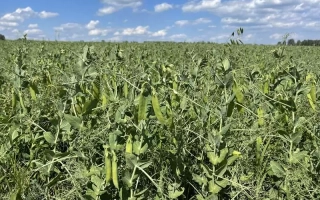
The Estafeta pea variety is a mid-season leafless variety developed at the Federal Scientific Center for Grain and Pulse Crops through multiple individual selection from a hybrid population. The variety's vegetative period is about 84 days, making it slightly longer compared to other mid-season varieties. Estafeta is distinguished by its high lodging resistance due to the mustachial leaf shape wit…
Growth Direction
On grain
Plant Type
Leafless (Bearded)
Growing Season
80-90 days
Plant; height
Average Height
Description
The Estafeta pea variety is a mid-season leafless variety developed at the Federal Scientific Center for Grain and Pulse Crops through multiple individual selection from a hybrid population. The variety's vegetative period is about 84 days, making it slightly longer compared to other mid-season varieties. Estafeta is distinguished by its high lodging resistance due to the mustachial leaf shape with a rigid structure and a sturdy stem, allowing the plant to successfully withstand unfavorable weather conditions such as strong gusts of wind and heavy rains. The variety has high productivity potential: average yield over the years of variety testing reached 37.3 c/ha, exceeding standard indicators by 3.6 c/ha. Maximum yields were recorded at 47.7 c/ha and 50.3 c/ha in different testing years. The grain of the variety is characterized by good cookability and excellent taste, making it recommended for food purposes. Protein content in the grain is at the level of 20–25%, which corresponds to quality standards for food peas. Despite high agronomic indicators, the Estafeta variety is susceptible to ascochitis and especially to root rots, which requires attention when choosing cultivation conditions and applying protective measures. The variety is recommended for cultivation in the Central region of Russia, including the Bryansk and Rязан regions, where it demonstrates stable yield and high grain quality.
Crop & resistance
Crop
Disease resistance
Specifications
| Growth Direction | |
|---|---|
| Plant Type | |
| Growing Season | 80-90 days |
| Plant; height | Average Height |
| Beans; Protein Content | 20-22% |
| Registration year | 2021 |
| Catalog | Catalog → Pea |
| Legal data |
Show · 1 |
| Country | Russia |
Store offers
Prices are updated on loadLoading offers…
Aggregator catalog: prices are collected automatically from store websites, normalized by AI and converted at the current exchange rate. Before ordering, confirm the price and availability on the store's website. This block is not indexed by search engines — the data is loaded after the page opens.
Not yet комментариев. Be the first!



See also
Often considered together with this variety





Recently viewed
Products you’ve viewed on this site
Reviews · 0